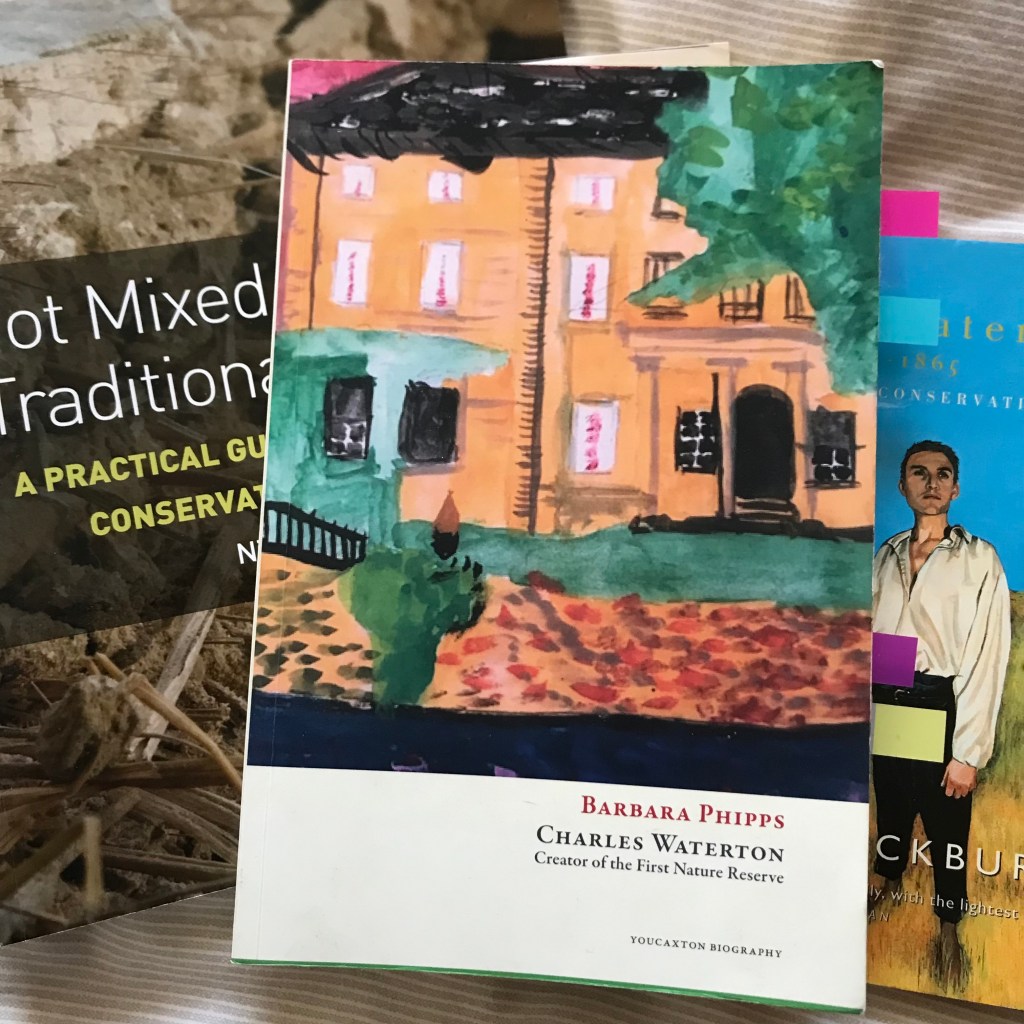
The first walk around the wall was in April with Barbara Phipps, a resident of Walton, member of the Friends of Waterton’s Wall and author of Charles Waterton: Creator of the First Nature Reserve.
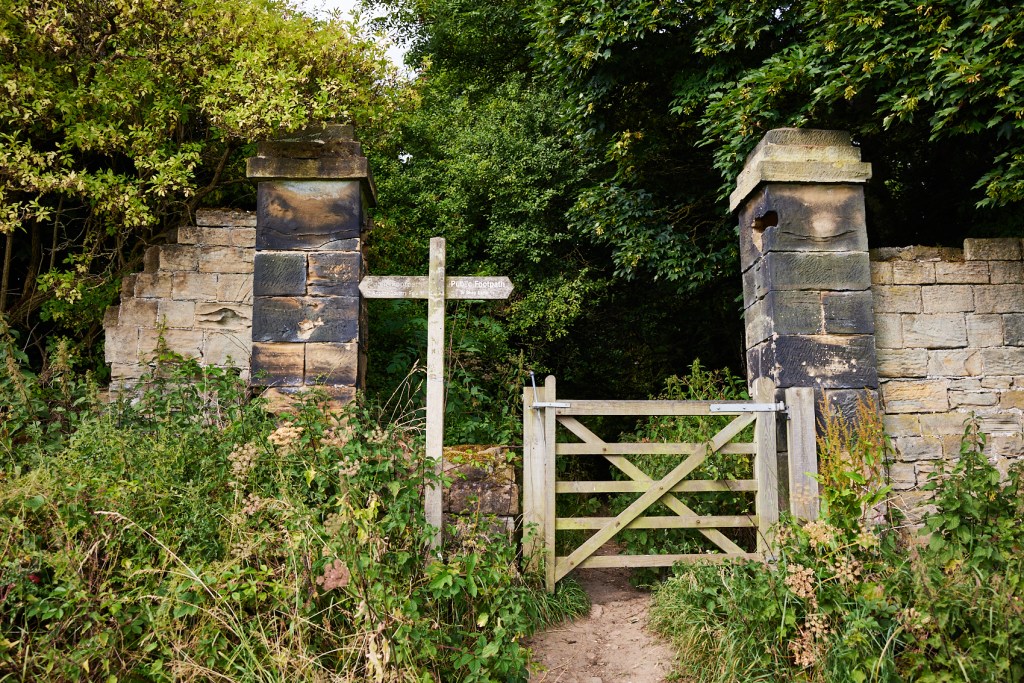
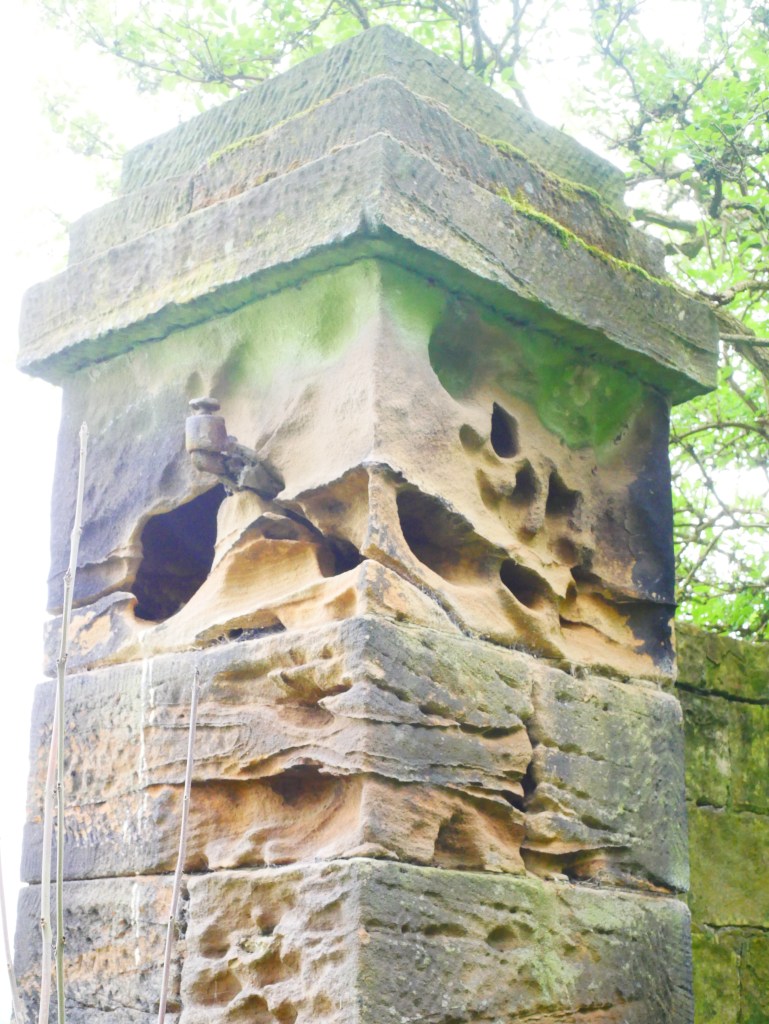
It was fascinating to hear about Charles Waterton, to gain insights into his life and character and to start to understand certain features of the wall. The gateway which is halfway down the Crofton side of the wall is one such curiosity. It appears to lead nowhere and yet it has a definite presence. Barbara mentioned the possibility that this gateway may originally have marked the point where a track led off to nearby Nostell Priory allowing Waterton to visit his friends there.
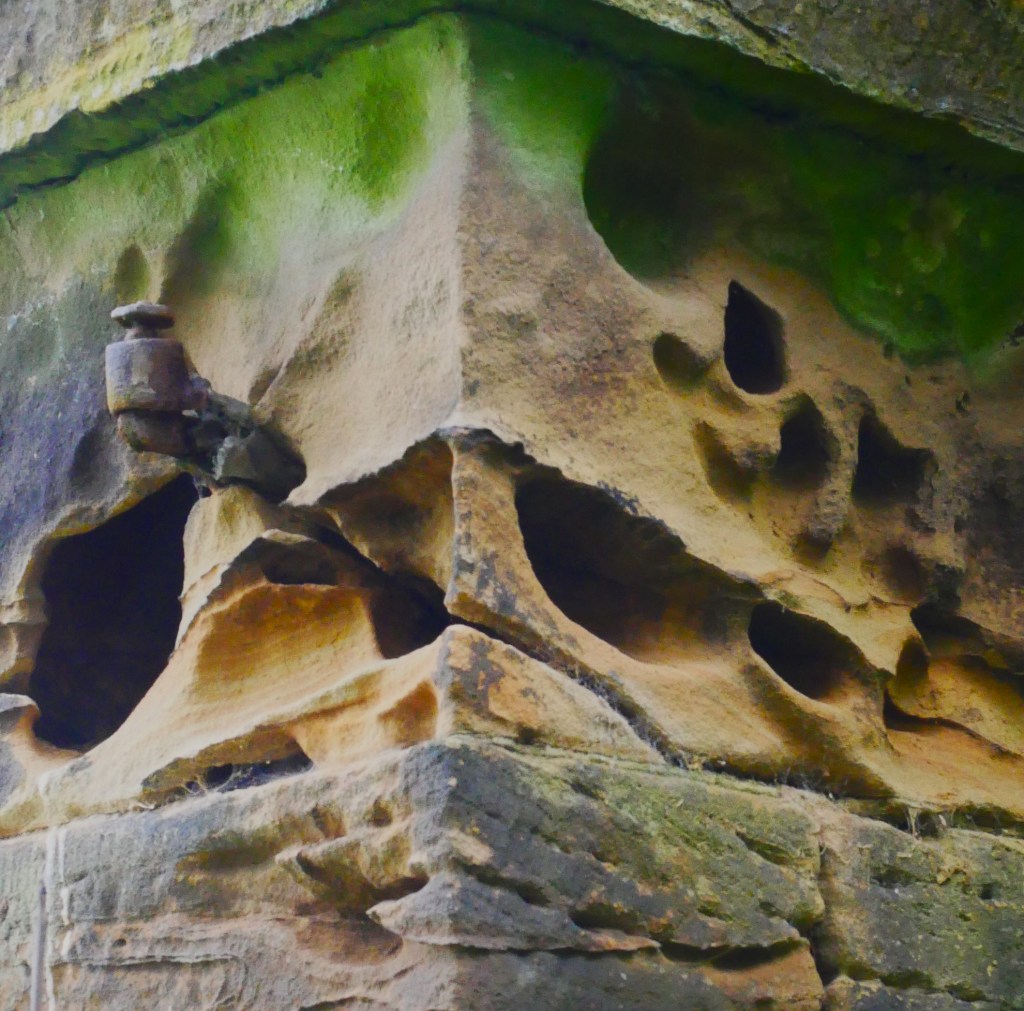
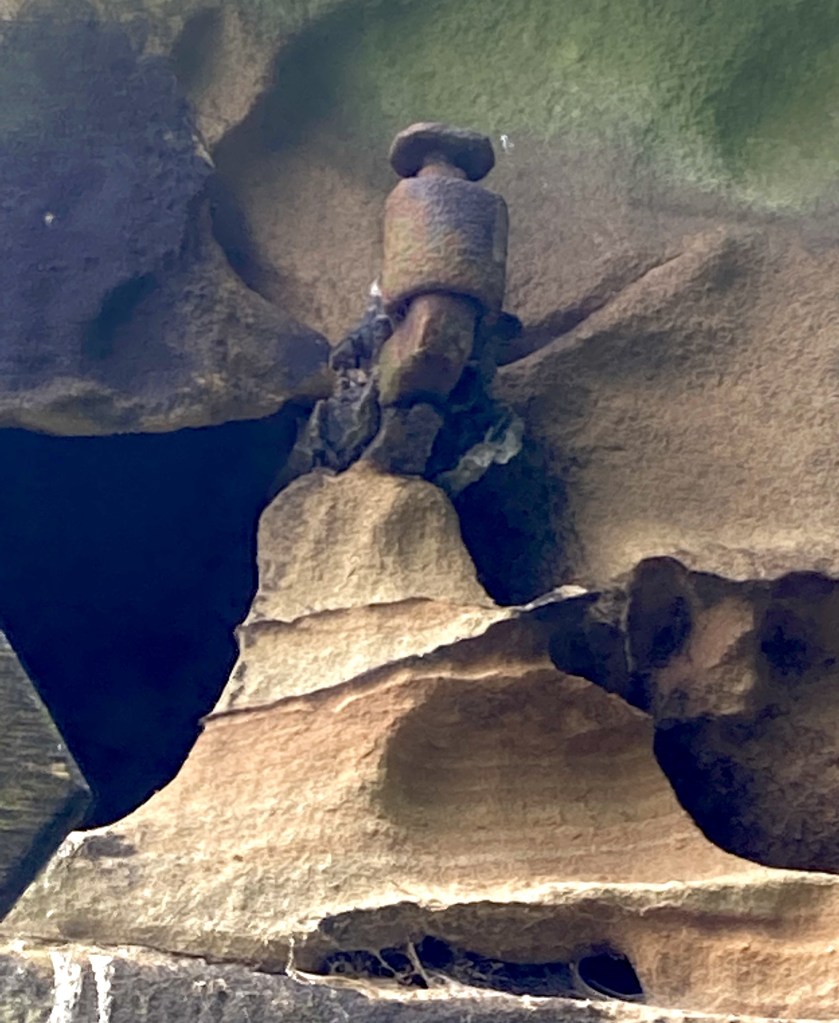
The stone has weathered differently to the rest of the wall around it and I wonder whether it is millstone grit rather than sandstone as this was frequently the material of choice for monuments and gate posts. I wonder, too whether it dates from a different time. Whatever the history though, the erosion, particularly around the trauma to the stone of the fitting of the iron hinges, has all the mystery of a miniature cave system.
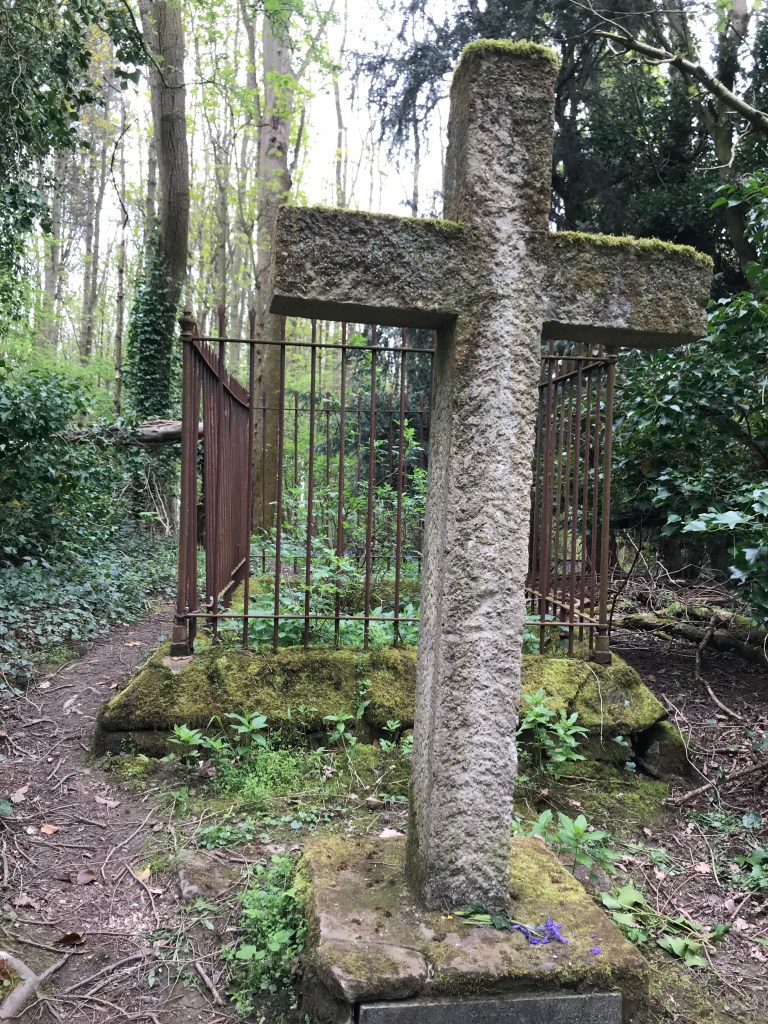
Hidden within the estate and largely neglected is Waterton’s grave. It originally overlooked his beloved lake which has now receded and, in many ways, I found it sad to see this in such a sorry state. In other ways though the wilderness feel it had seemed to fit equally with this man who loved to explore nature in the wild.
The second walk which happened a few weeks later was with Russ and Simon, also members of the Friends group. Their expertise is in construction and architecture. This time we managed as complete a circumnavigation as is possible and it felt good to have gained a physical feel for the extent of the wall and the huge variation of its condition.
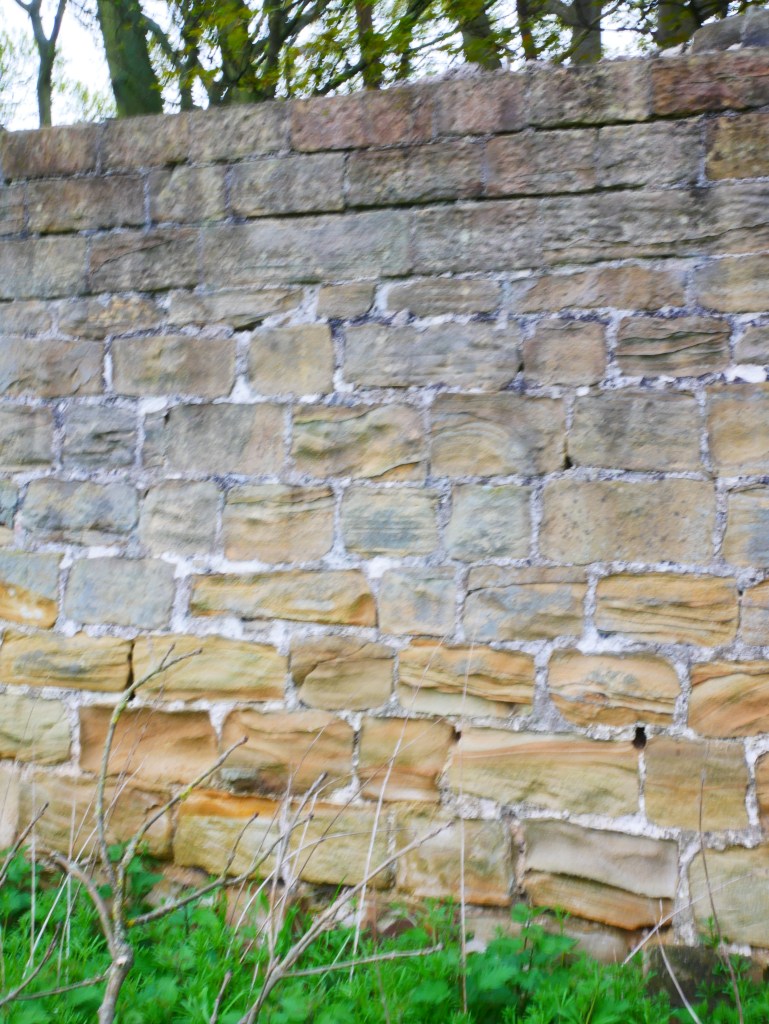
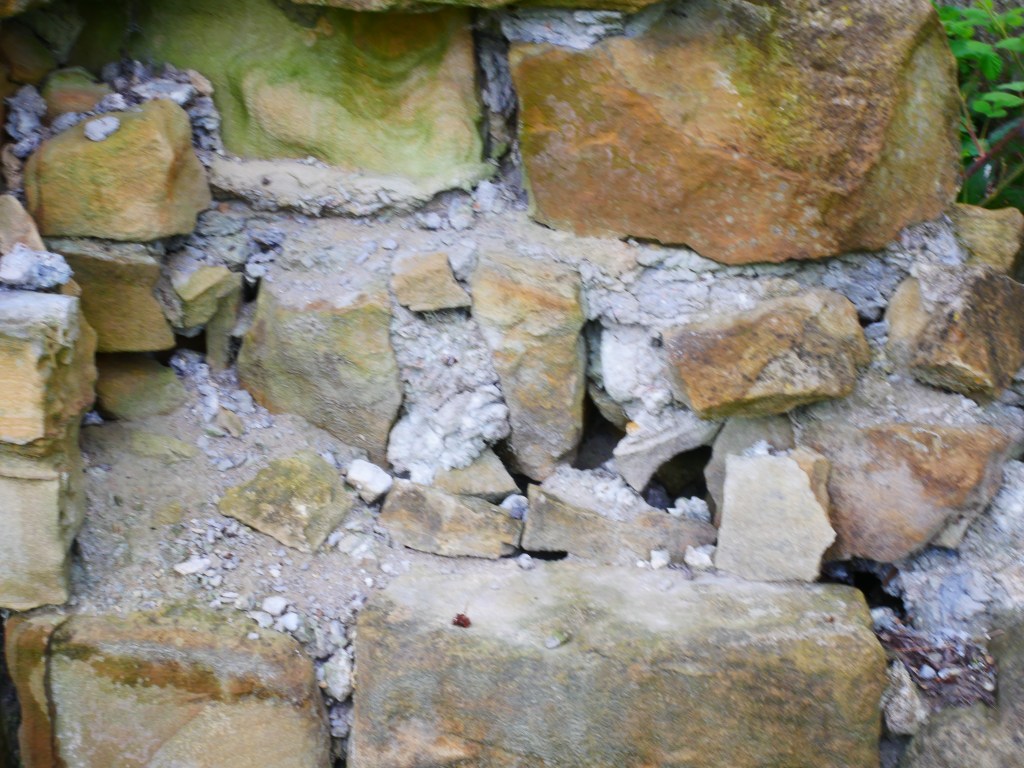
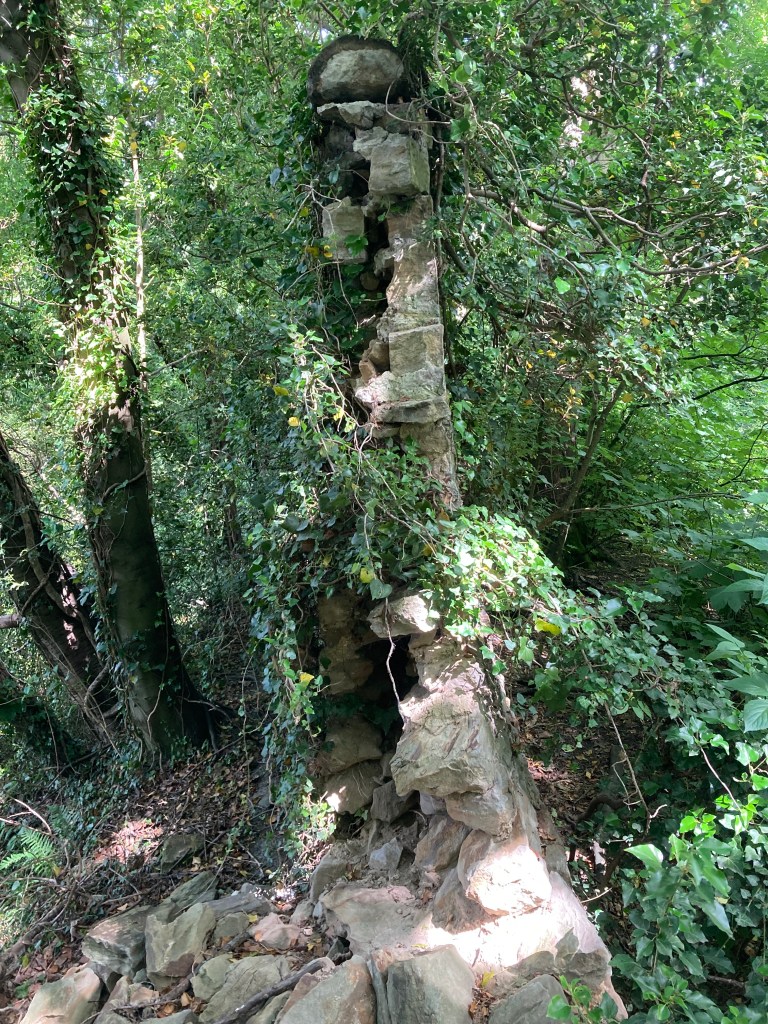
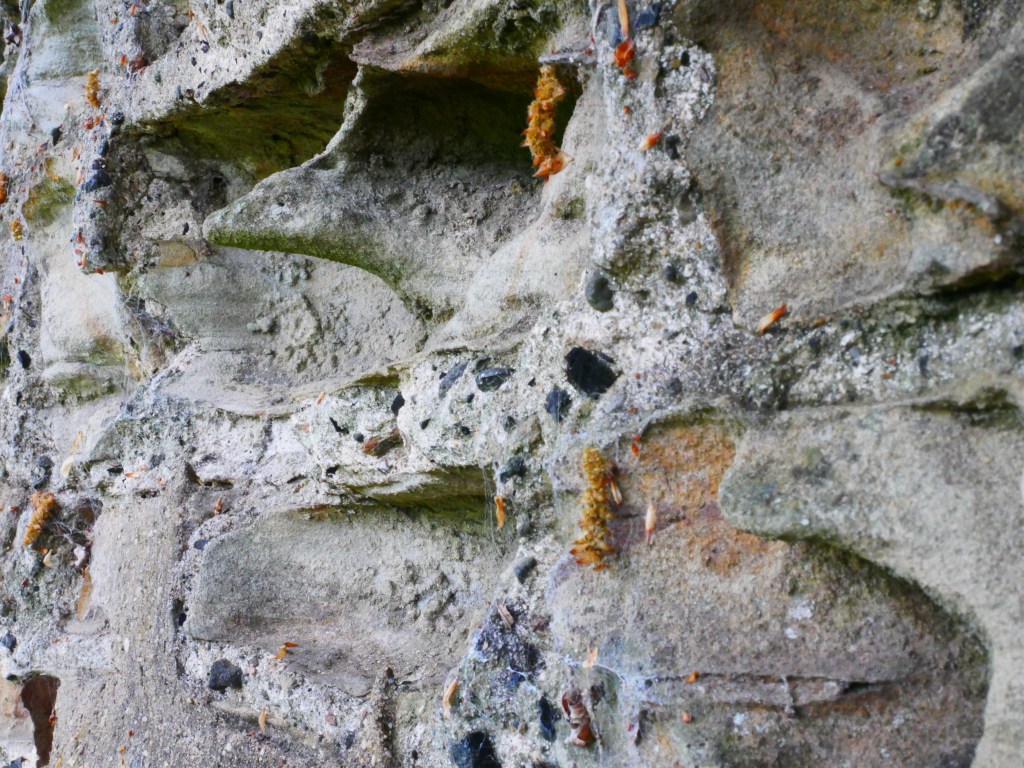
It was on this walk I learned about the importance of getting the lime mortar right;
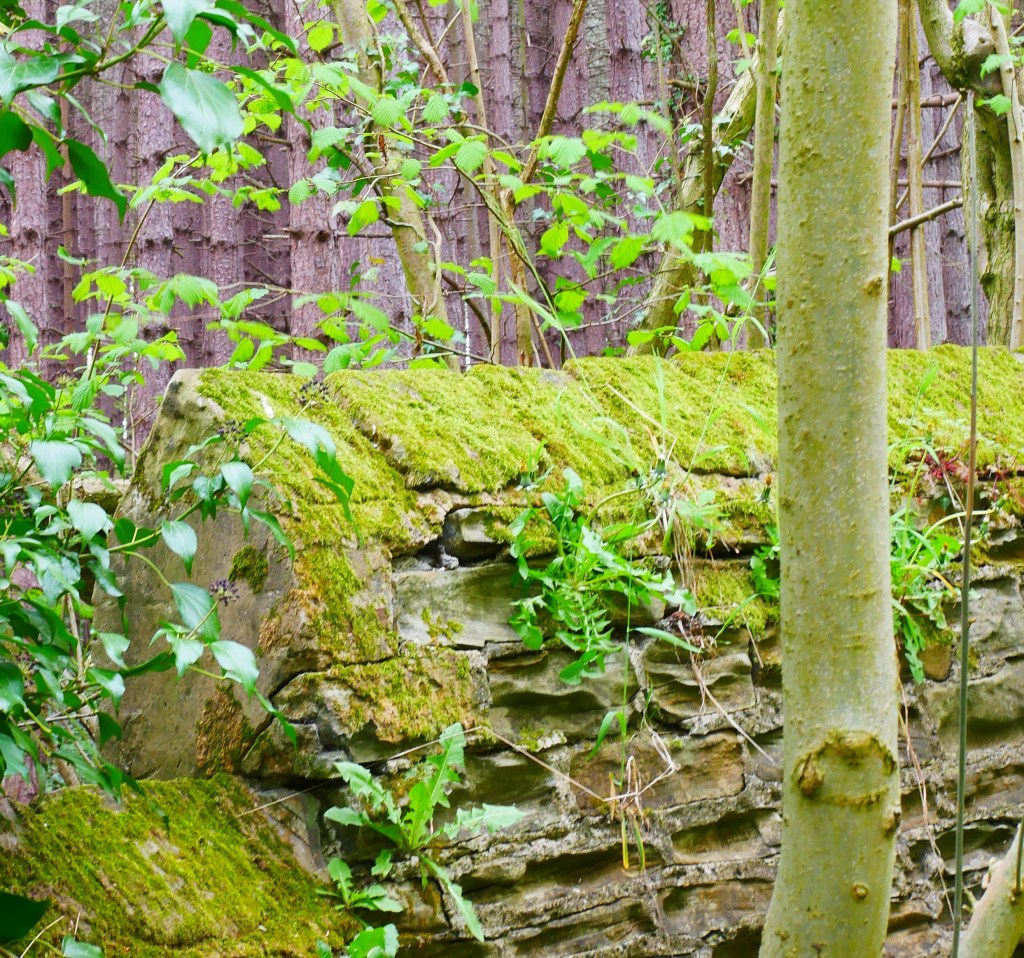
the role of the coping stones and the different shapes, from twice-weathered to hogsback;
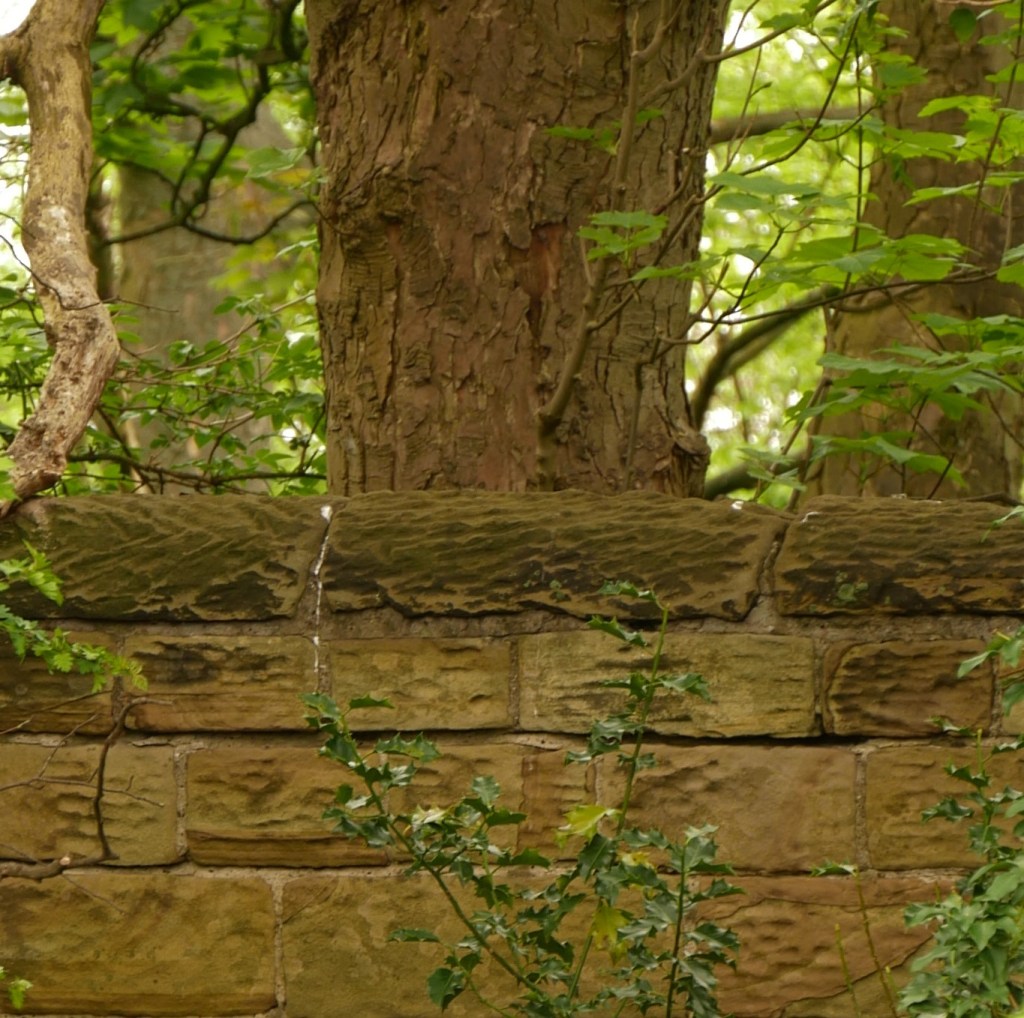
and the appearance of iron ore in the sandstone and how varying concentrations of iron ore oxidise to produce the different colours in the stone.
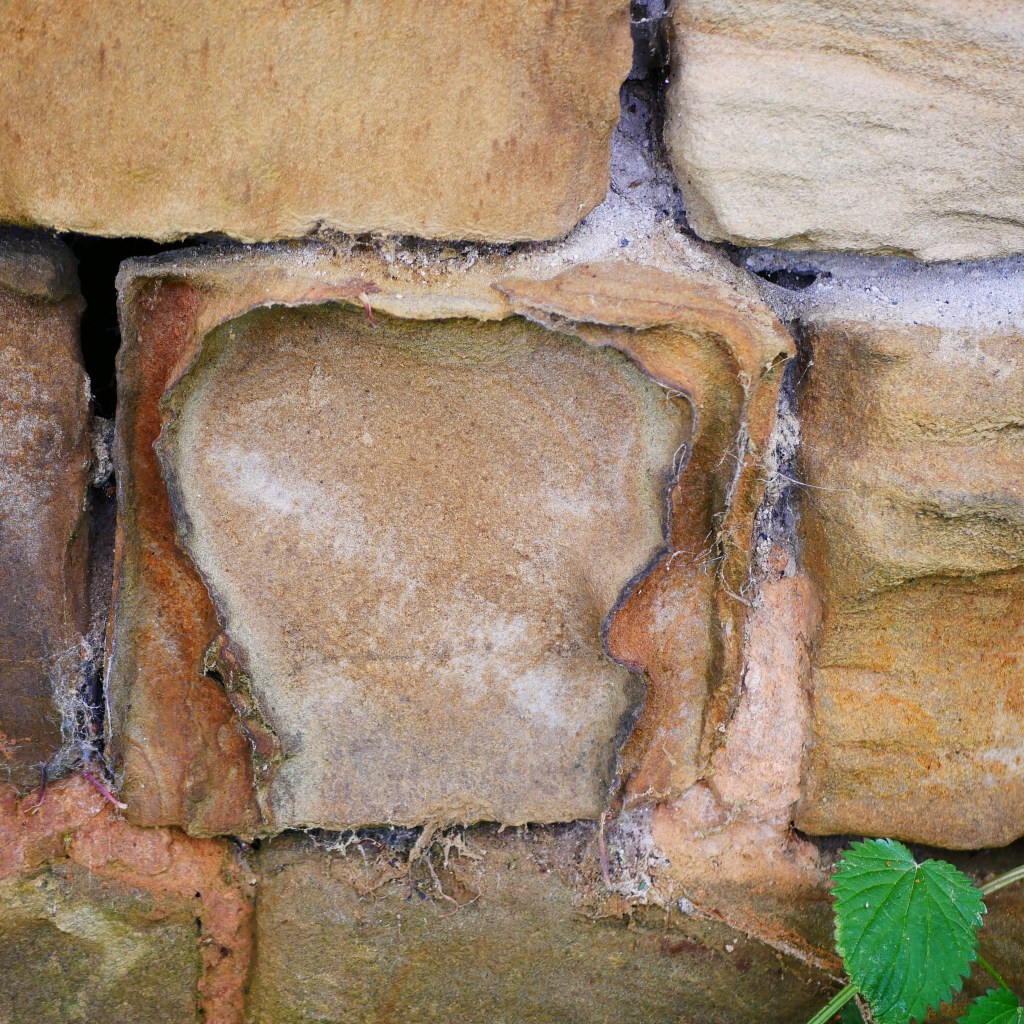

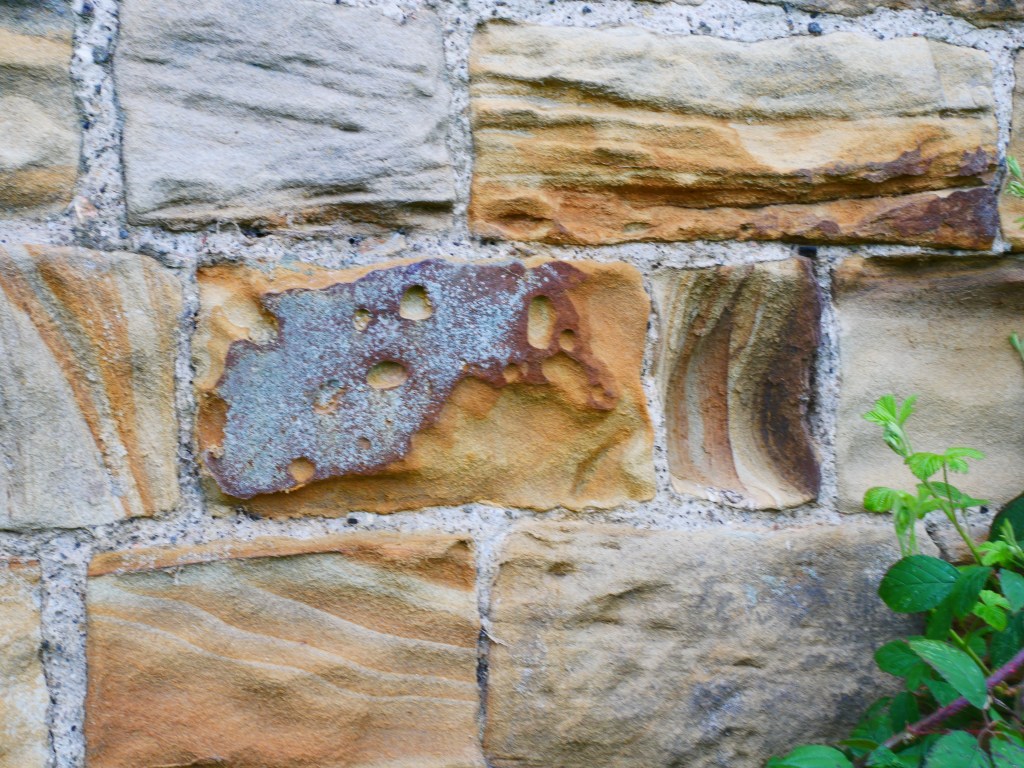
Walking the wall that summer evening was fascinating and inspiring, and it enabled me to identify key points of the wall which I wanted to explore in the exhibition. But it was also worrying eye-opener as to the mammoth task ahead if the wall is to be preserved from further deterioration.
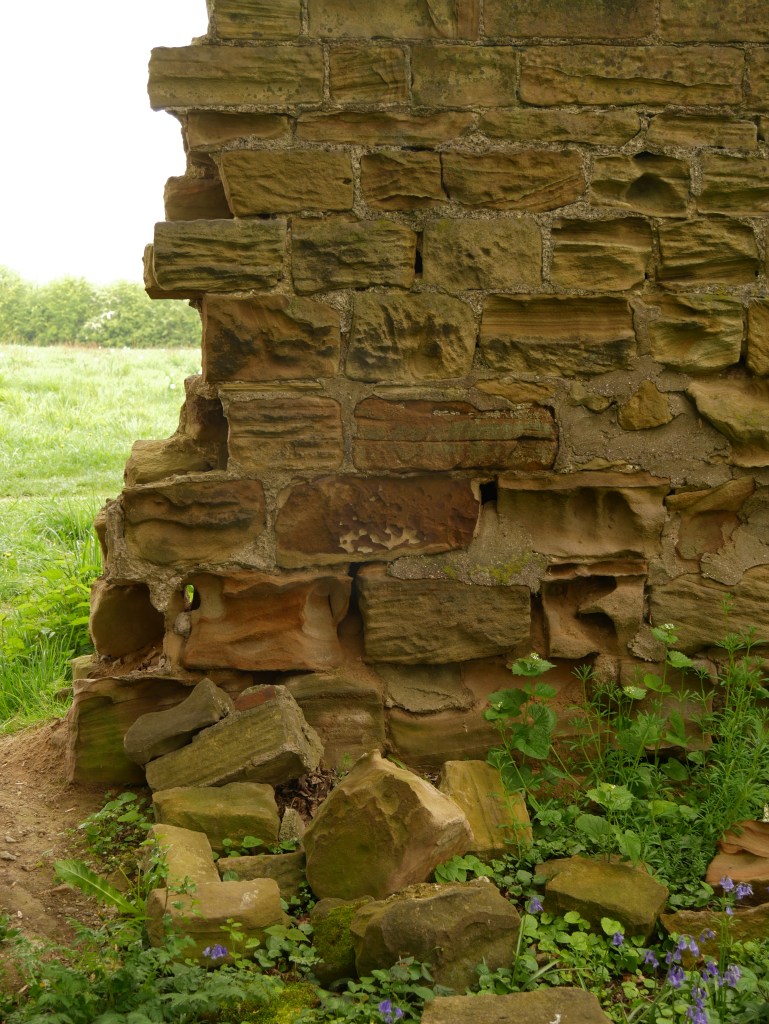
Next time: A birds eye view

 Helen Riddle