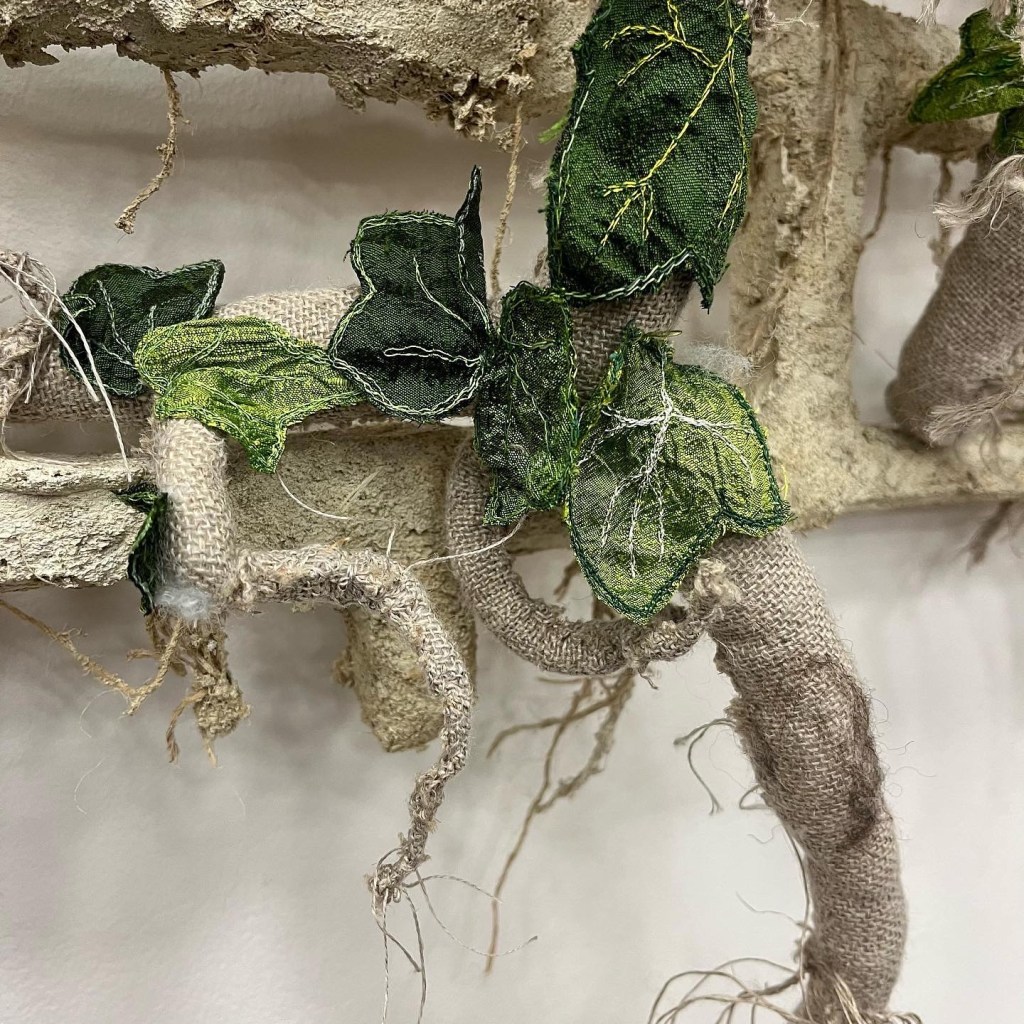
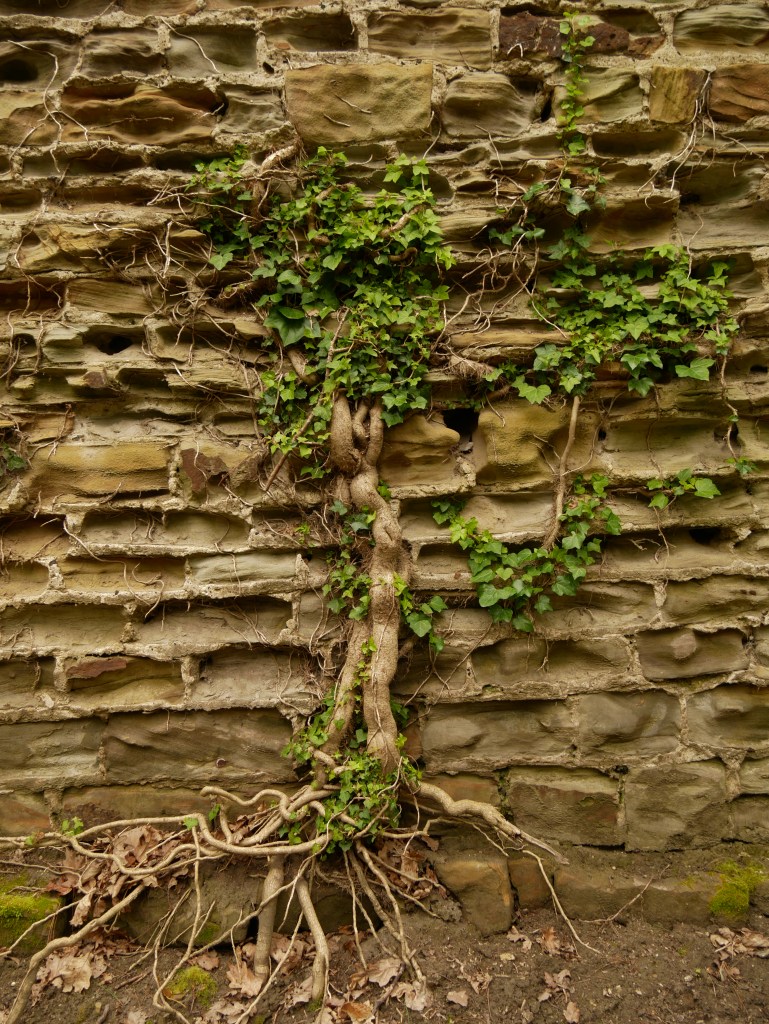
On the section of wall on which this piece is based there are a couple of large ivy stems which are prominent partly because the growth appears to have been cut back and the wall is exposed. The stems are intertwined, branching at the top and at the roots, into lateral growth bearing both leaves and a fringe of aerial roots.
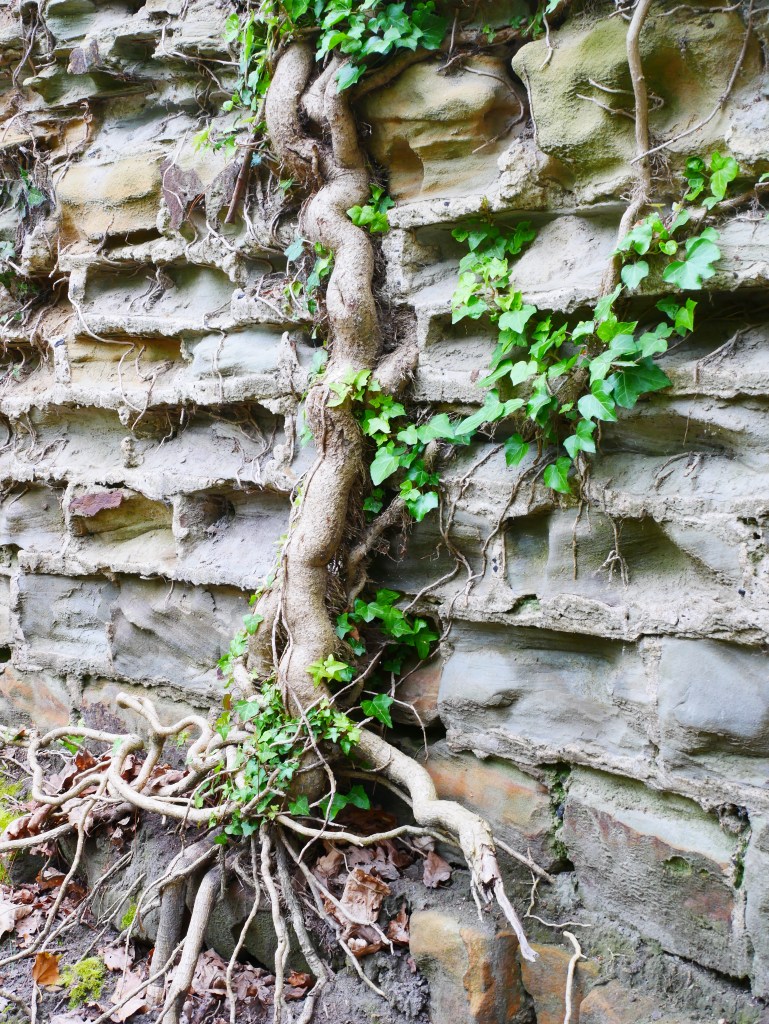
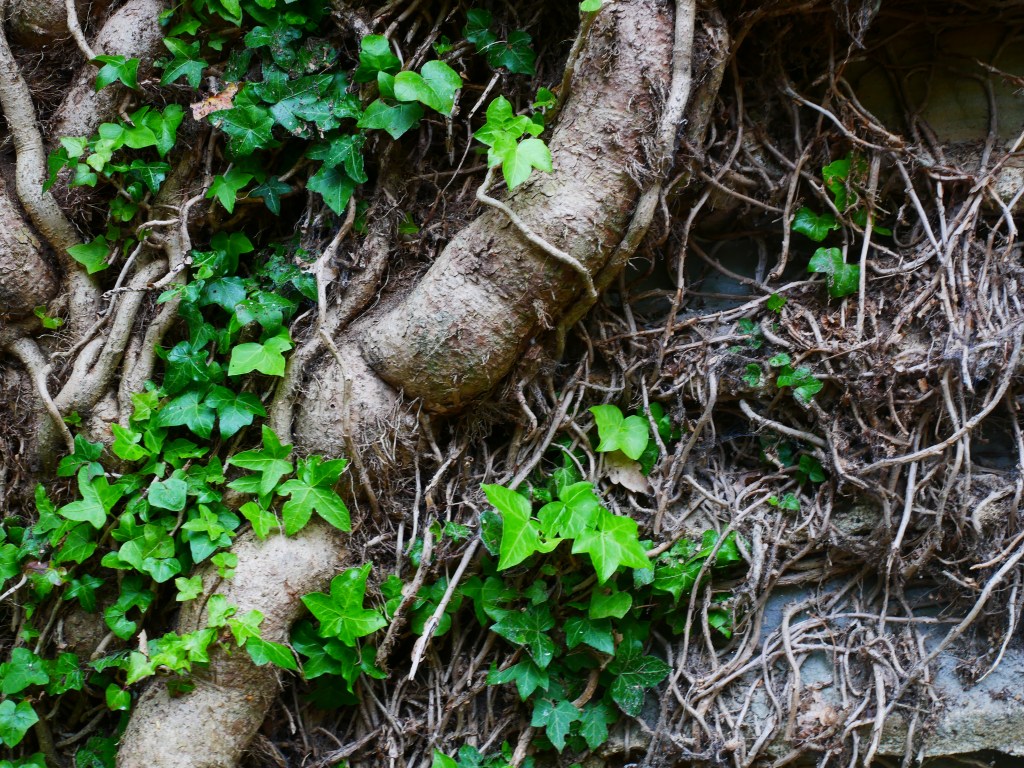
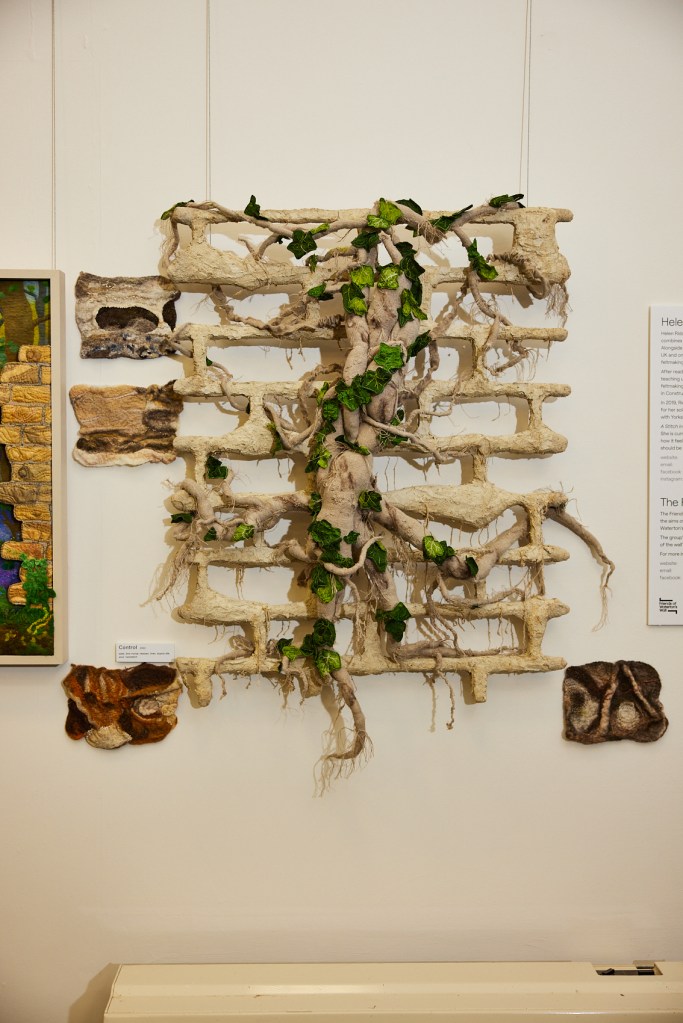
I considered creating these in felt, possibly in needle-felt, but then came across some pre-loved linen cloth at the back of a cupboard which I think my aunt had used to cover her lace-making cushions.
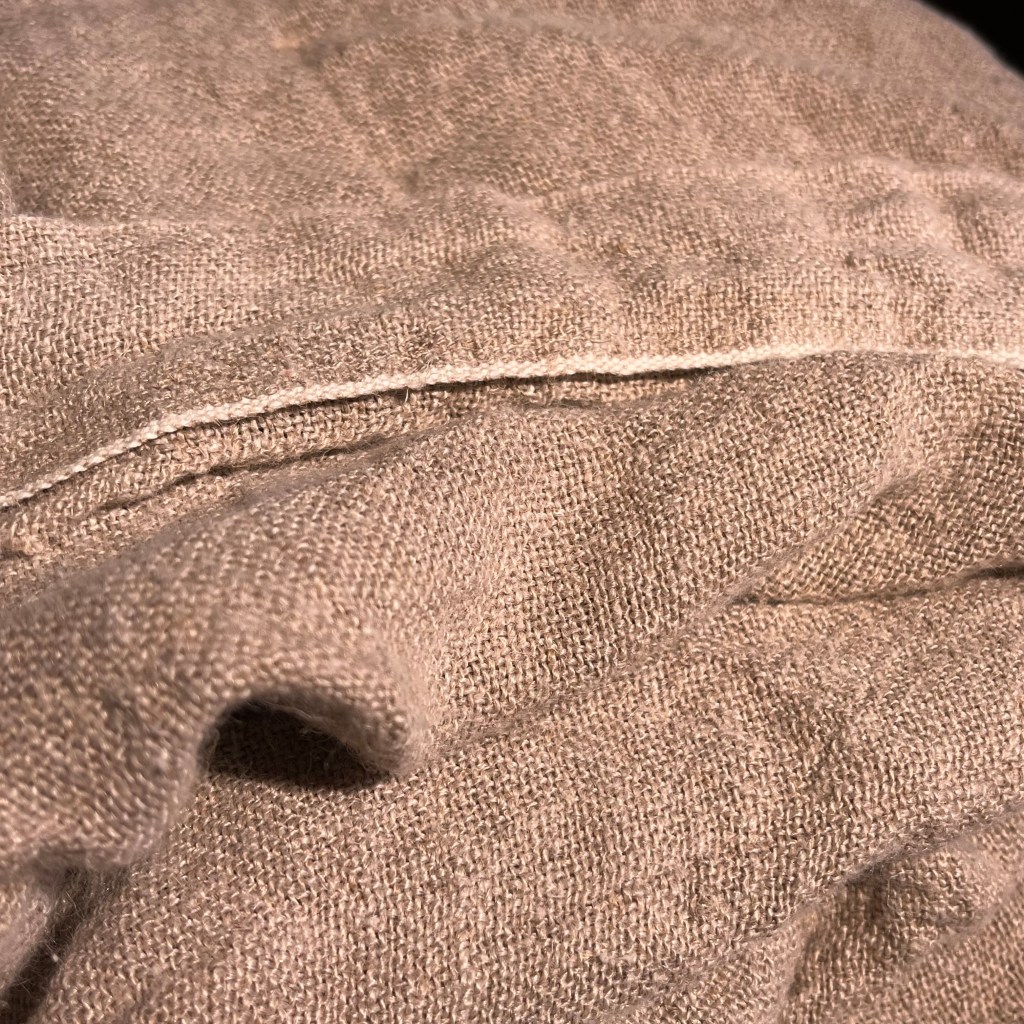
What function the linen had had originally was lost, but she had certainly cut up and reconstructed something else in making the covers. So it seemed OK to cut and reuse again; I was sure she would have approved.
The linen was soft, having been washed many times and I was delighted to discover how well it coped when I simply overlapped the raw edges to make a seam.
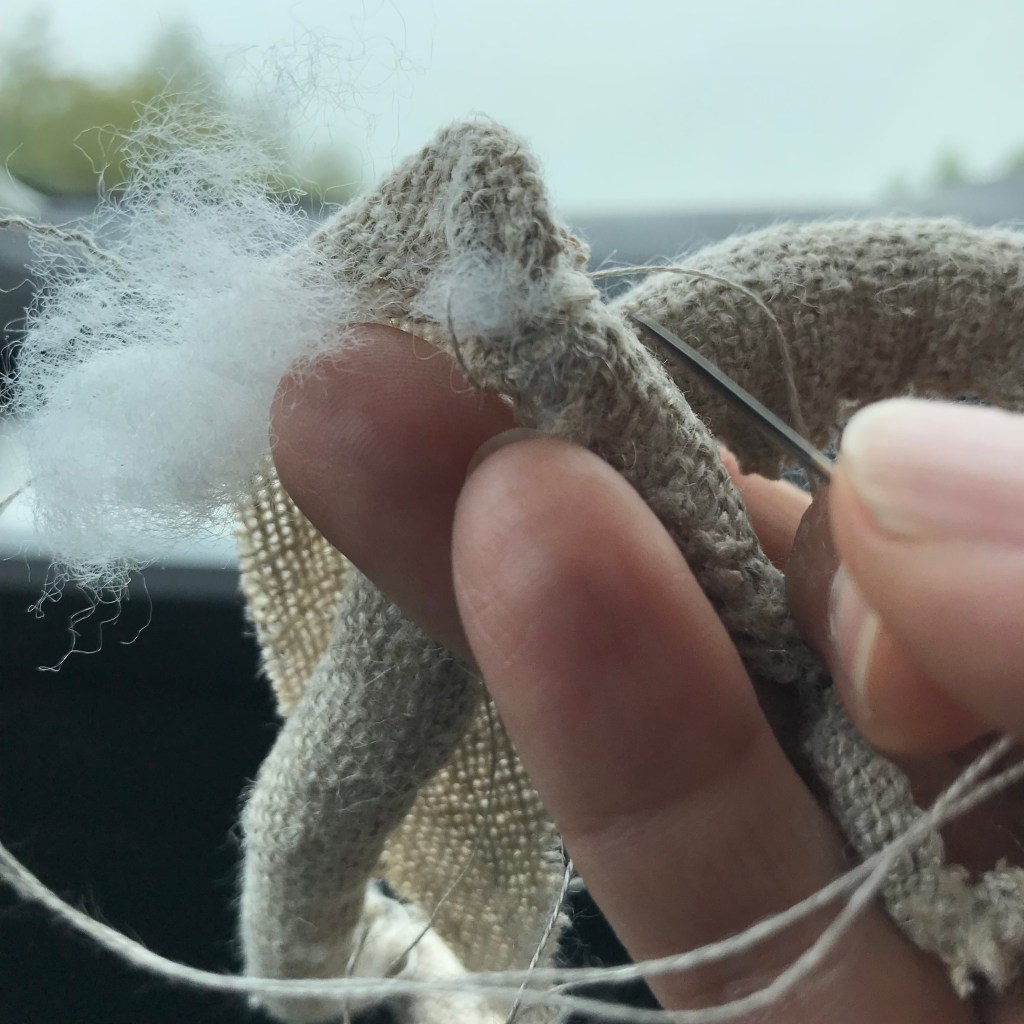
Using linen thread which was a perfect colour match enabled me to free-form the stems and laterals, creating a pile of elements without heed to an overall plan, and then stitching them together to form the shape I wanted.

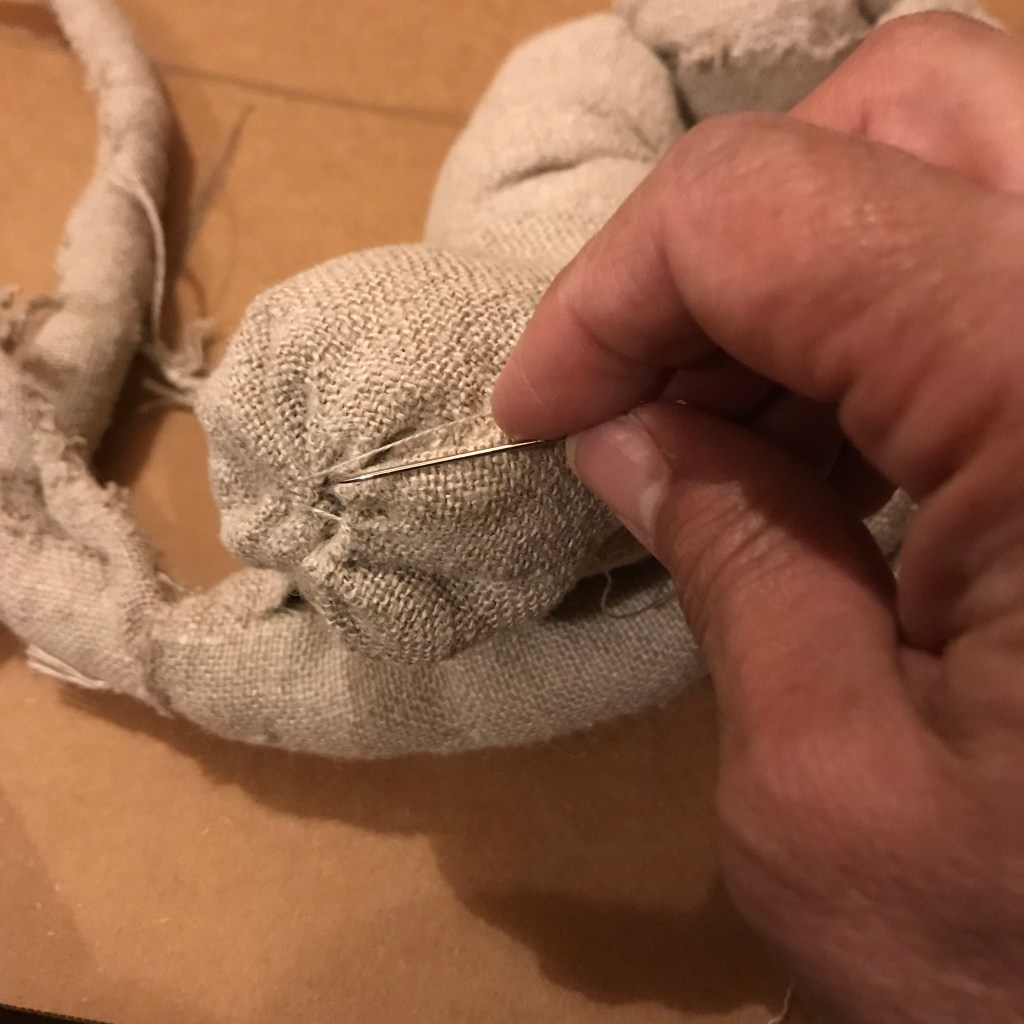
Any frayed edges or ends of the thread just became aerial roots which I then built up using both the linen thread and a wider linen string.


Working with linen fabric and stitching in linen thread was another source of tactile delight. It has a sort of scrunch to it, earthy and strong, an odd but satisfying friction, unlike working with cotton or wool or even silk.
Making the ivy root coincided with a holiday to Ireland. Although I was supposed to be having a break from work, I couldn’t resist slipping a little handstitch into my bag for the 3-hour ferry crossing. Also smuggling linen into Ireland seemed as pleasingly inappropriate as carrying coals to Newcastle! I think I can safely claim to be the only person on the Stena Line’s strange fluffy sunloungers who spent the crossing stitching ivy roots – possibly a world first!

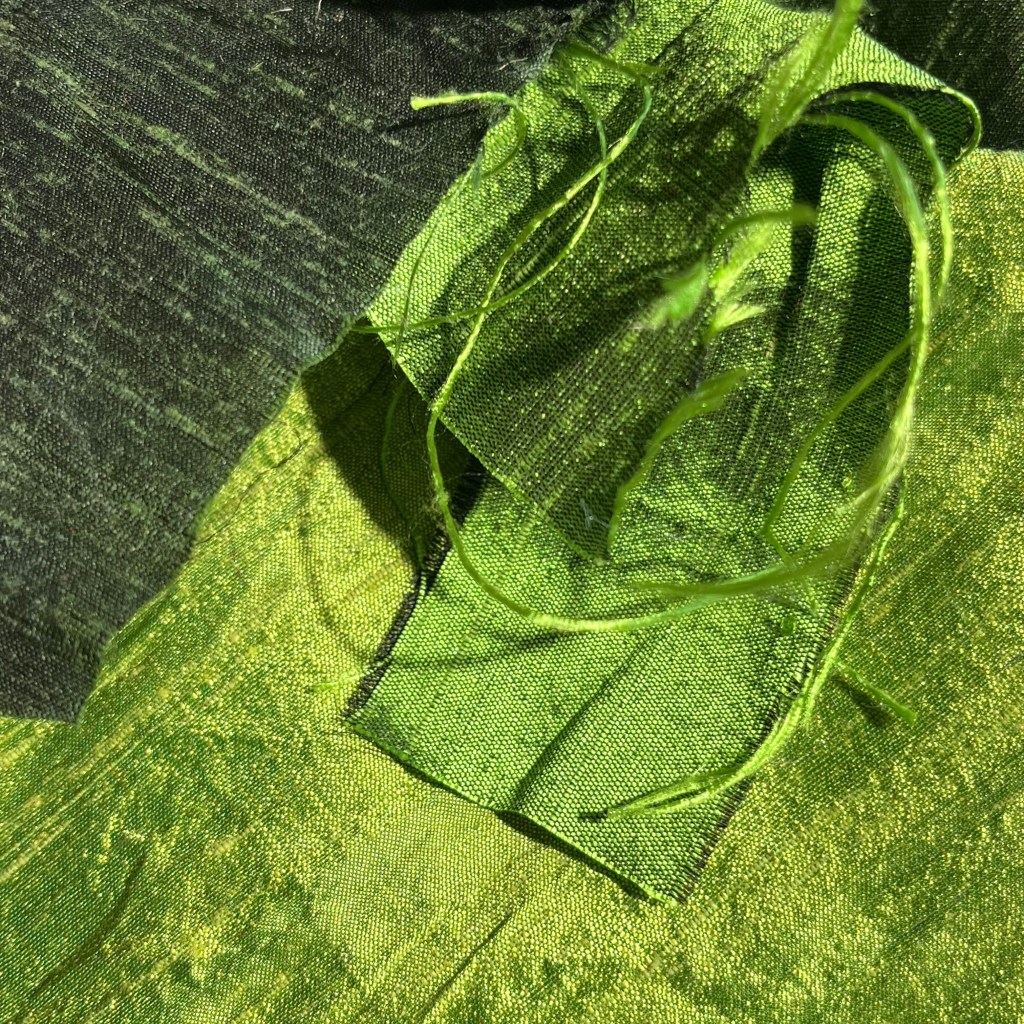
Then dupion silk for the leaves to catch the glossy green of the ivy.
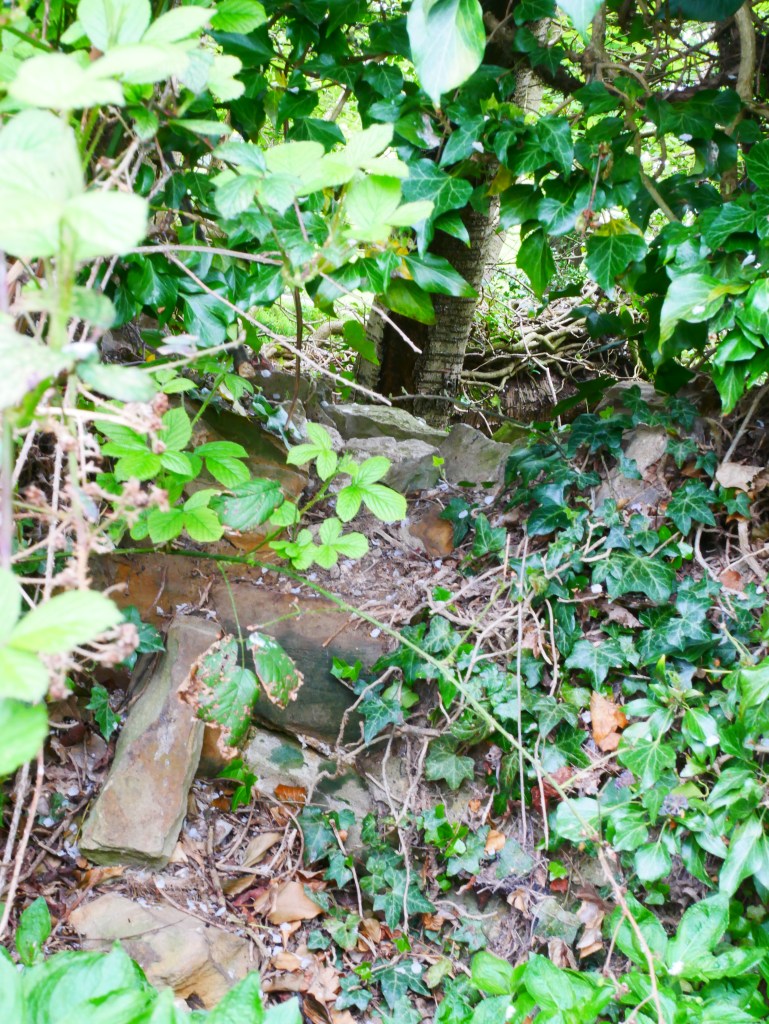
One thing I’m really pleased about is the colour match between the mortar and the linen. On the real wall it is hard to distinguish between root and wall and it is satisfying to have achieved this closeness in the two very diverse materials I selected.
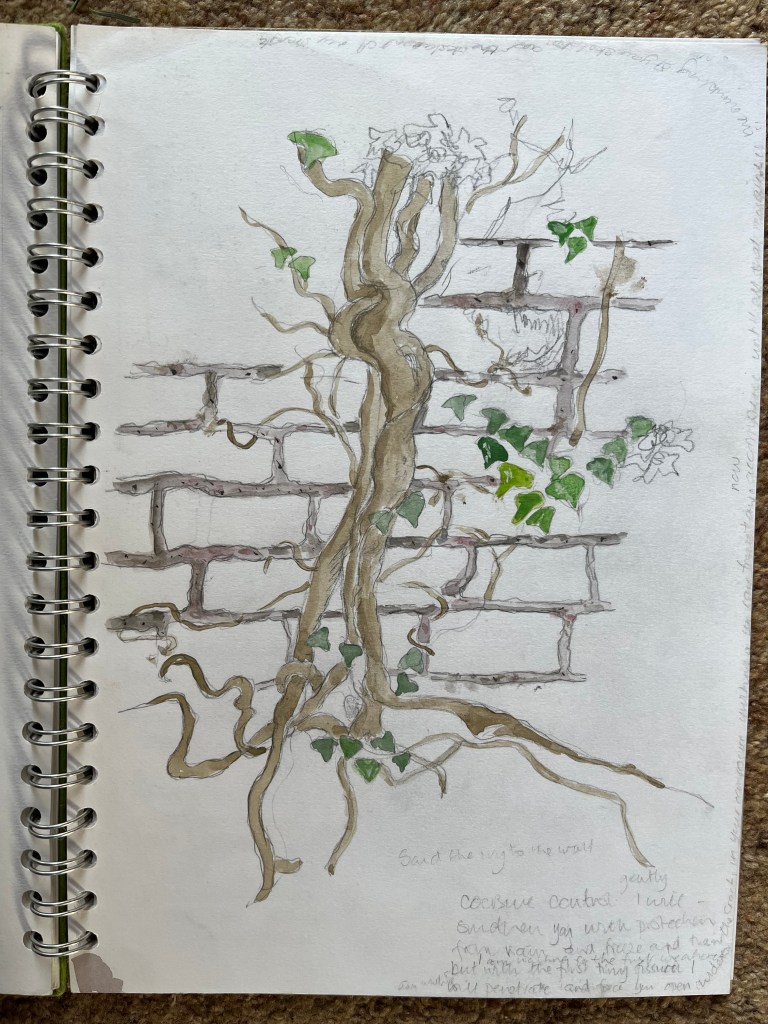
It brings me back to the relationship between ivy and the wall. Initially the wall was the support for the young plant, but now it’s hard to tell who is supporting whom and easy to see who is the more fragile. In terms of form, they are both beautiful, fascinating in their complexity. On balance though, I find it hard to forgive the ivy for what it has done.
Next time: a hole in the wall

 Helen Riddle