Entangled is a group exhibition featuring work by members of the International Feltmakers Association. The exhibition, which explores different aspects of the relationship between industry and the environment, is showing for a year at Leeds Industrial Museum at Armley Mills from 18th May 2024.
I am showing 3 pieces in the exhibition, all stemming from research into the West Yorkshire shoddy industry.
What is Shoddy?
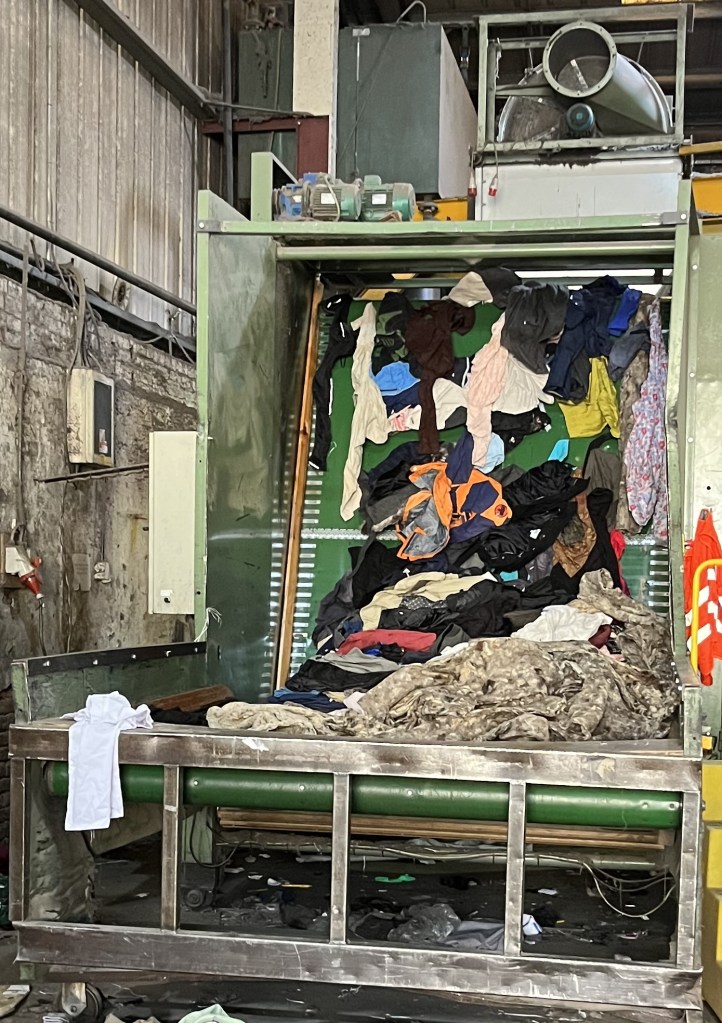
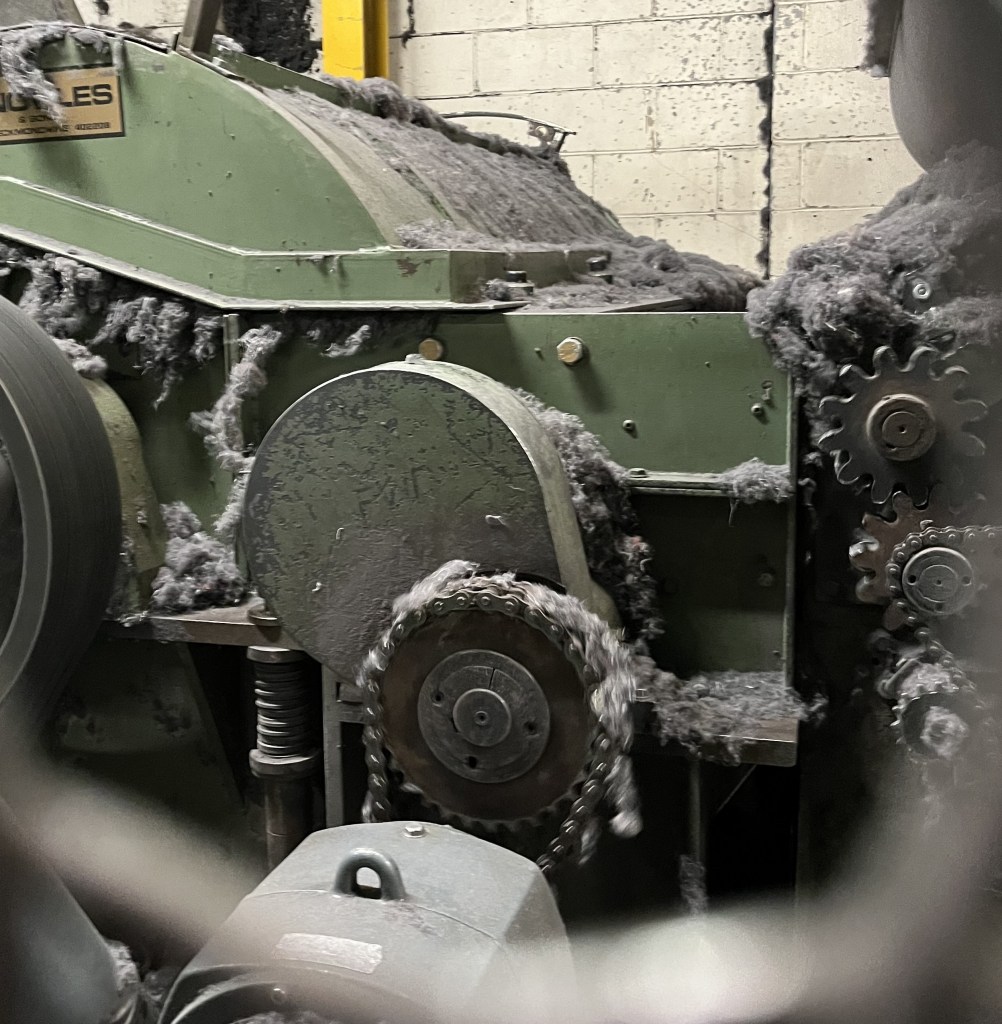
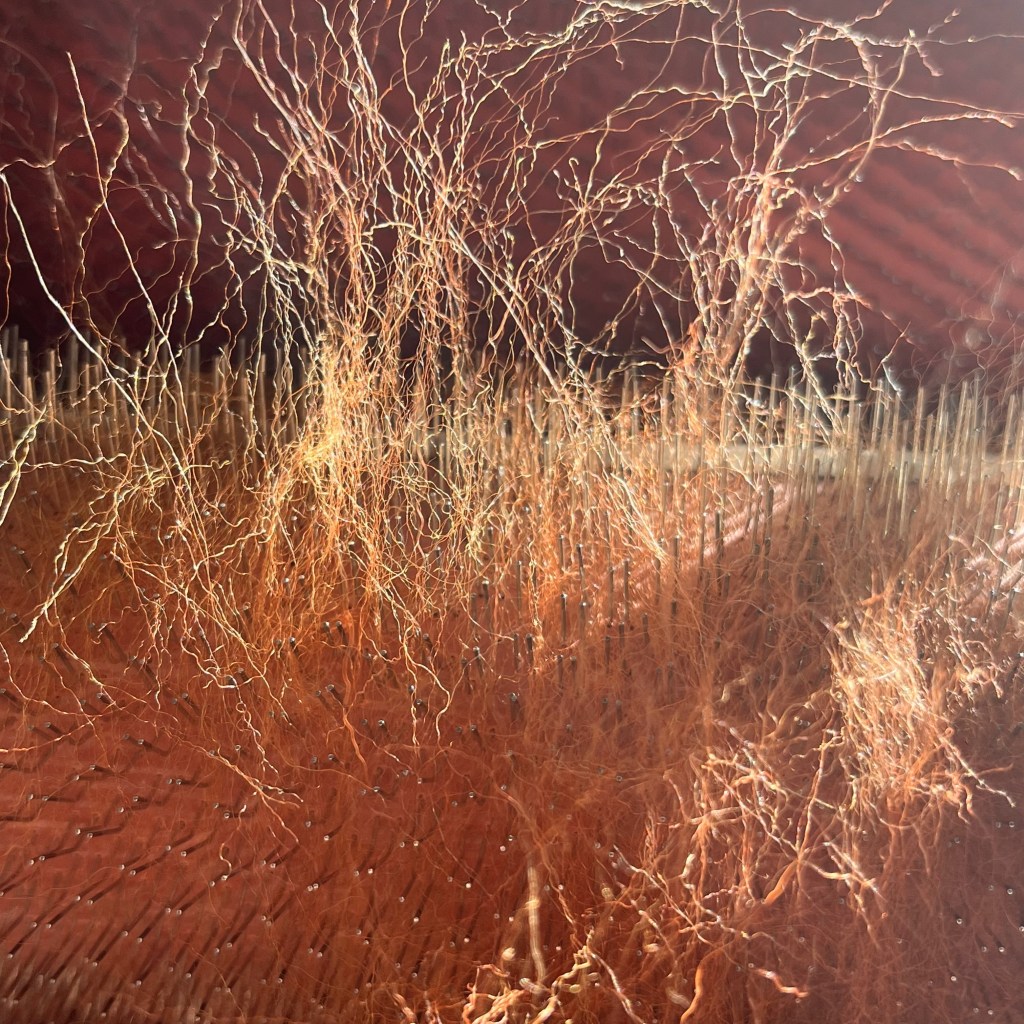
Shoddy production is a technique where old woollen textiles are ground up on spiked cylinders, called swifts, in a garneting machine. The resulting fibres are blended with a little new wool to add strength. These fibres can then be carded and spun into new yarn. This recycling technique was born in West Yorkshire in the 1800s. For years the process was kept secret and saw small mill towns, such as Batley, Morley, Dewsbury and Ossett, grow rich.
This recycling process was well ahead of its time, but over the centuries, as synthetic fibres started to dominate, the shoddy mills fell into decline. A few remain, mainly producing mattress stuffing from mixed fibres and insulation materials from pure wool.
Works
A Very Yorkshire Circularity 2024
Hand made felt, wire, silk, shoddy wool insulation by Edward Clay & Co.
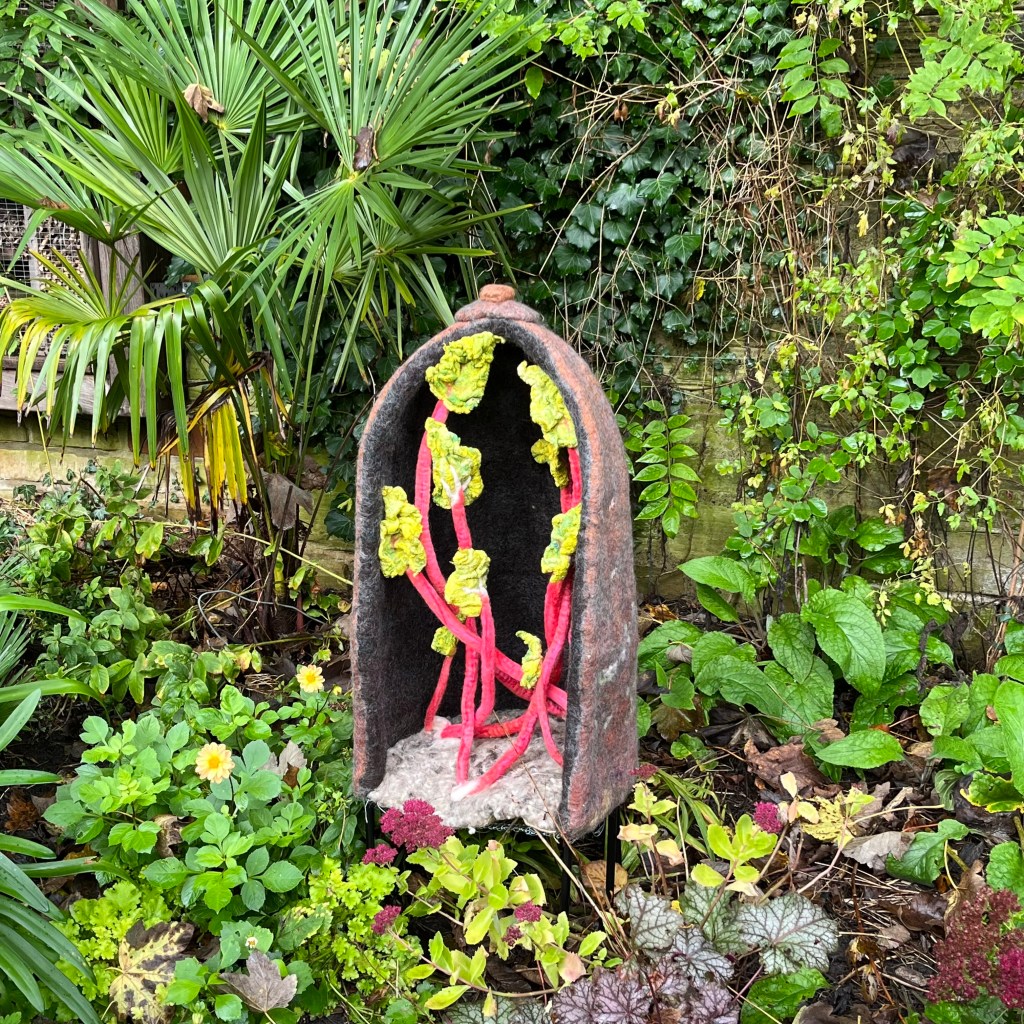
For this piece I wanted to focus on the link between two proud West Yorkshire industries; forced rhubarb and shoddy come together here. For many years the waste fibres from the recycled wool of shoddy manufacture were used by the rhubarb farmers as a nitrogen rich fertiliser and mulch.
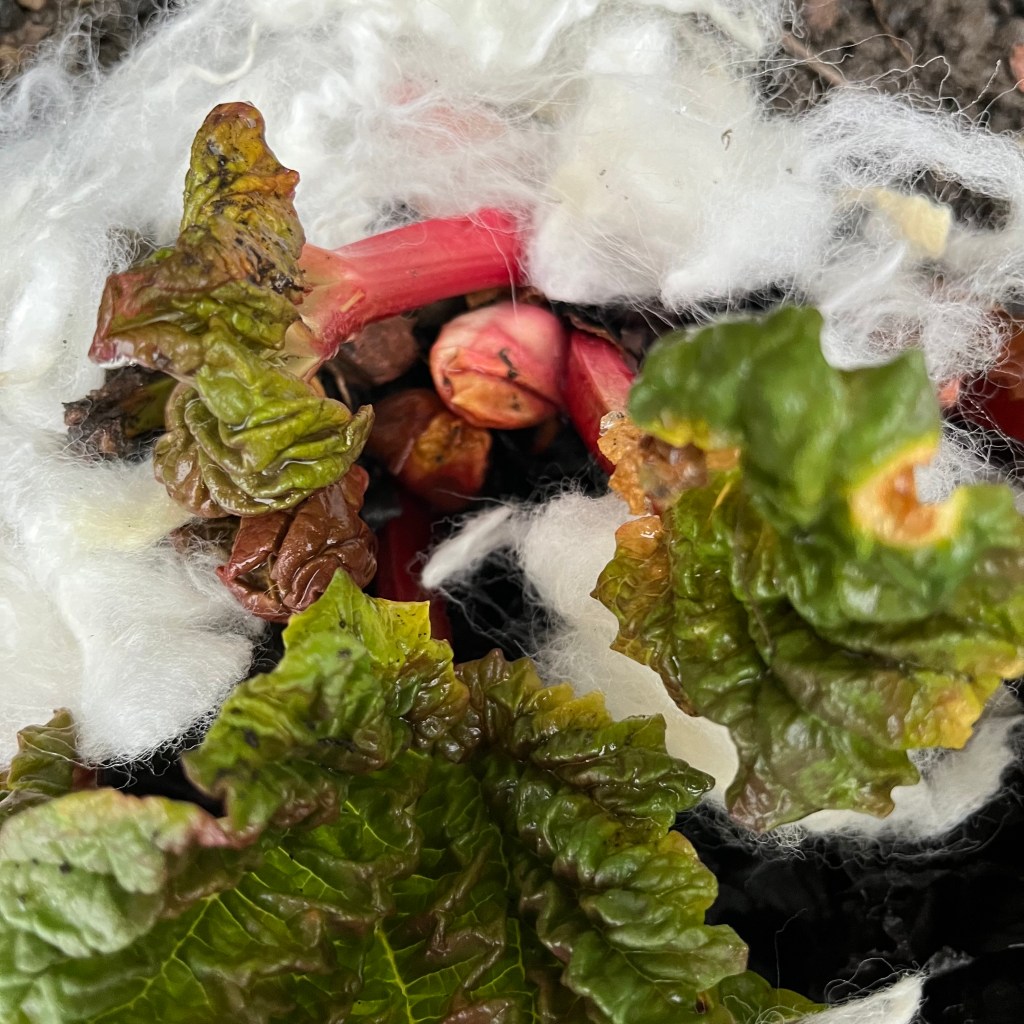
In this piece I formed the felt shell like a terracotta
forcer around a metal frame and created felt rhubarb stalks, incorporating silk in the leaves to give them the gloss of the waxy crinkled leaves.

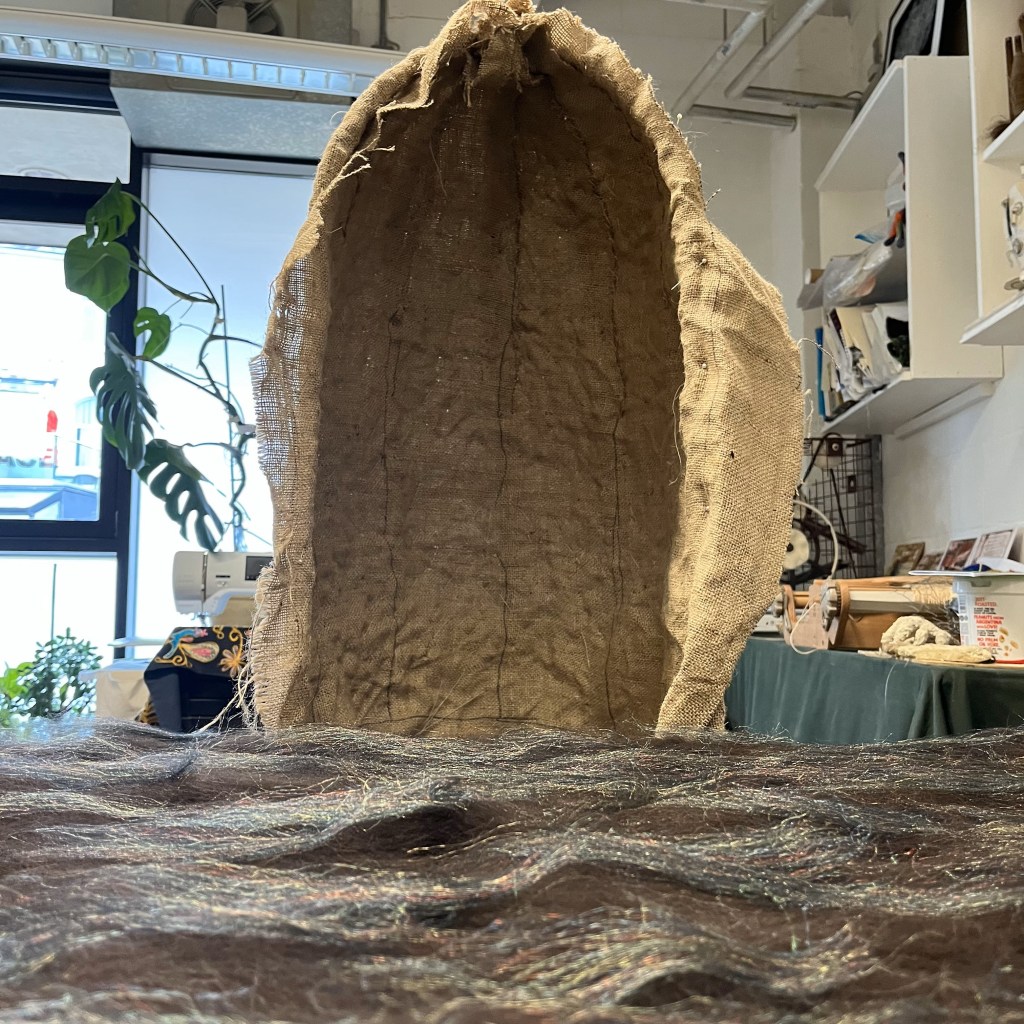
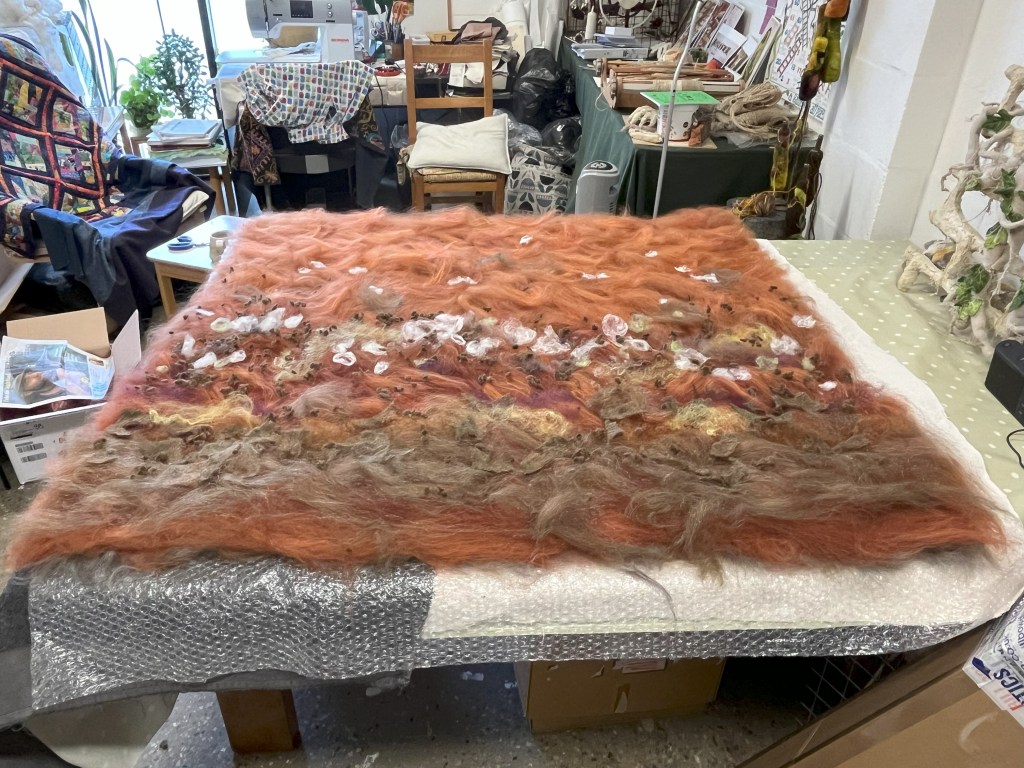
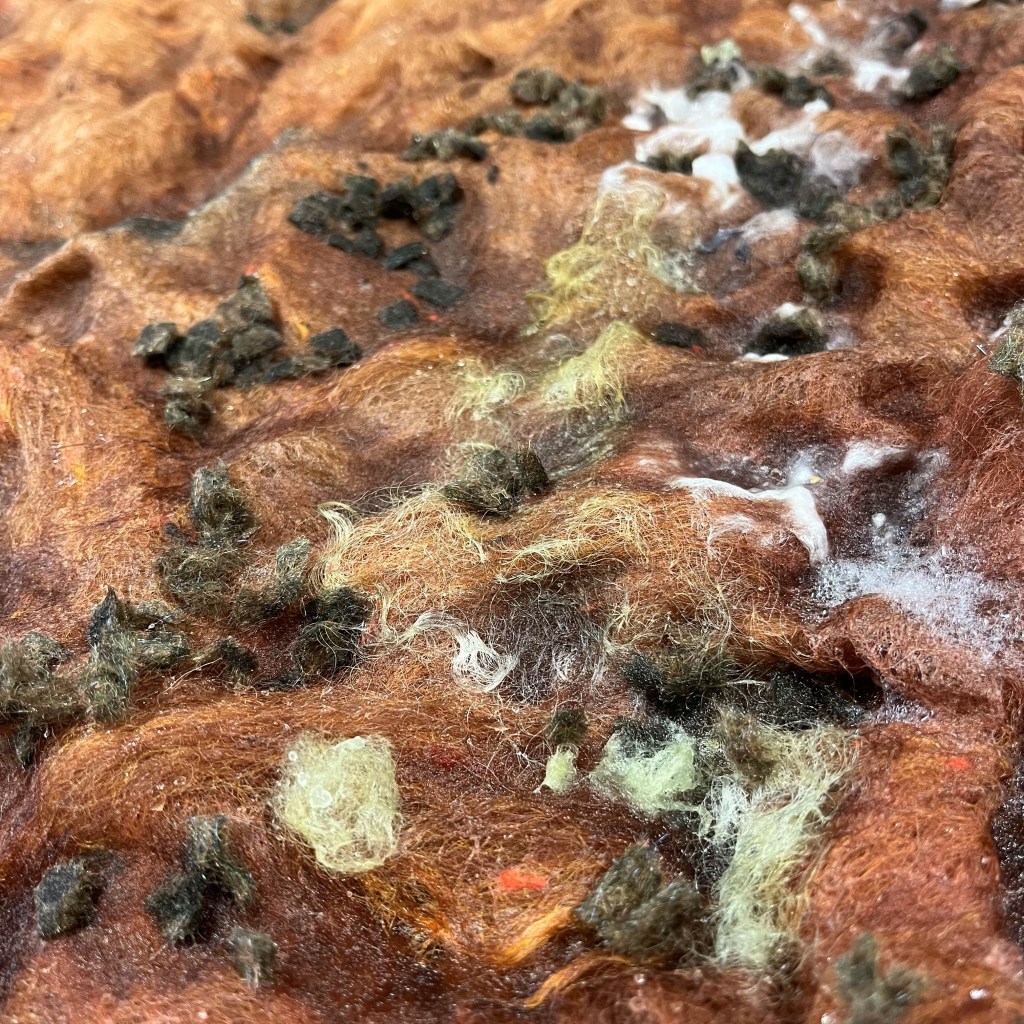
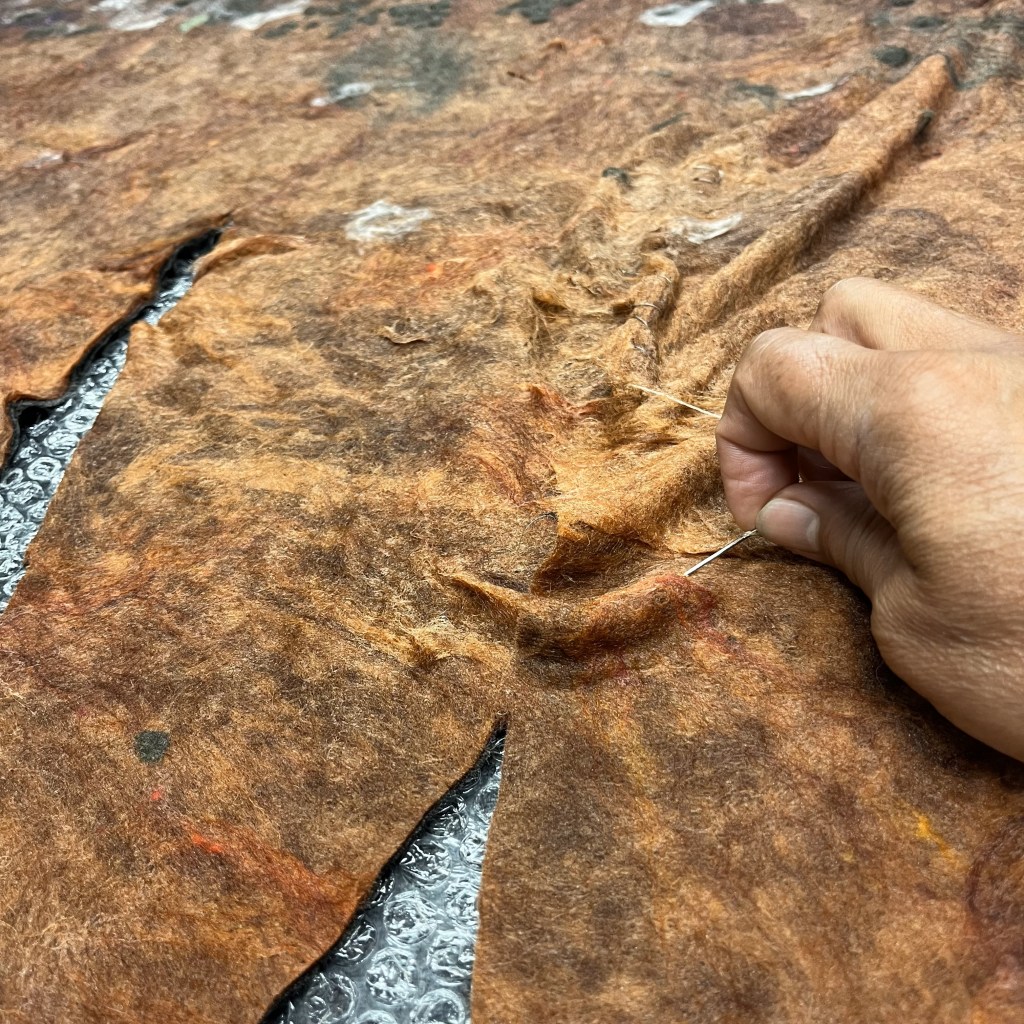
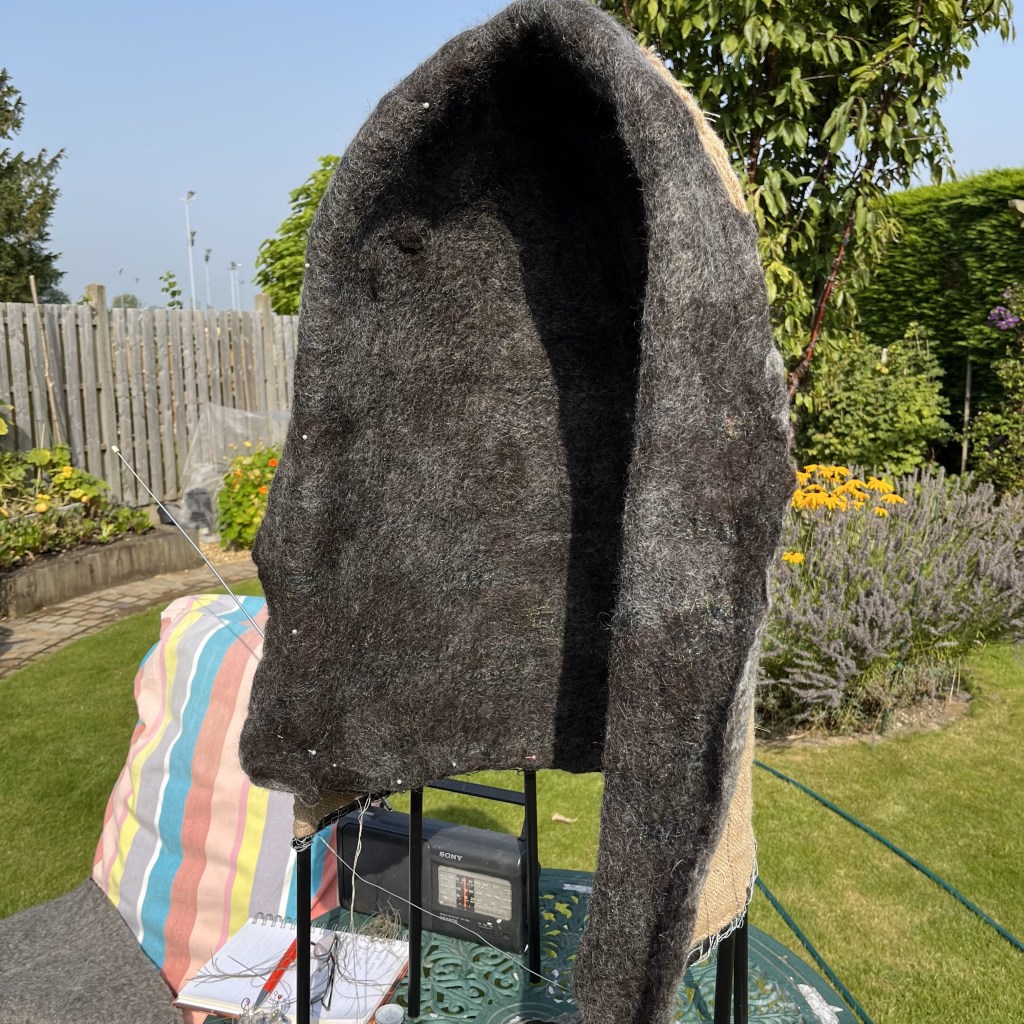
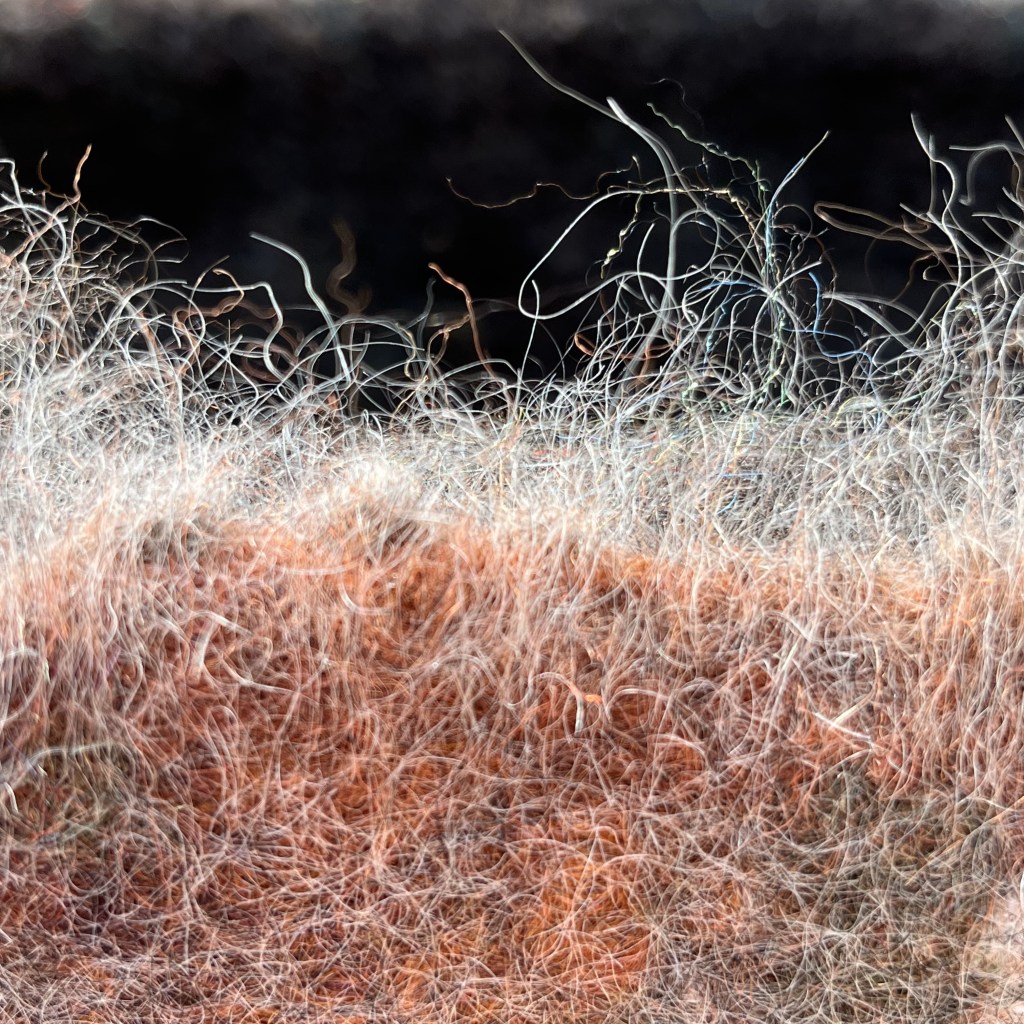
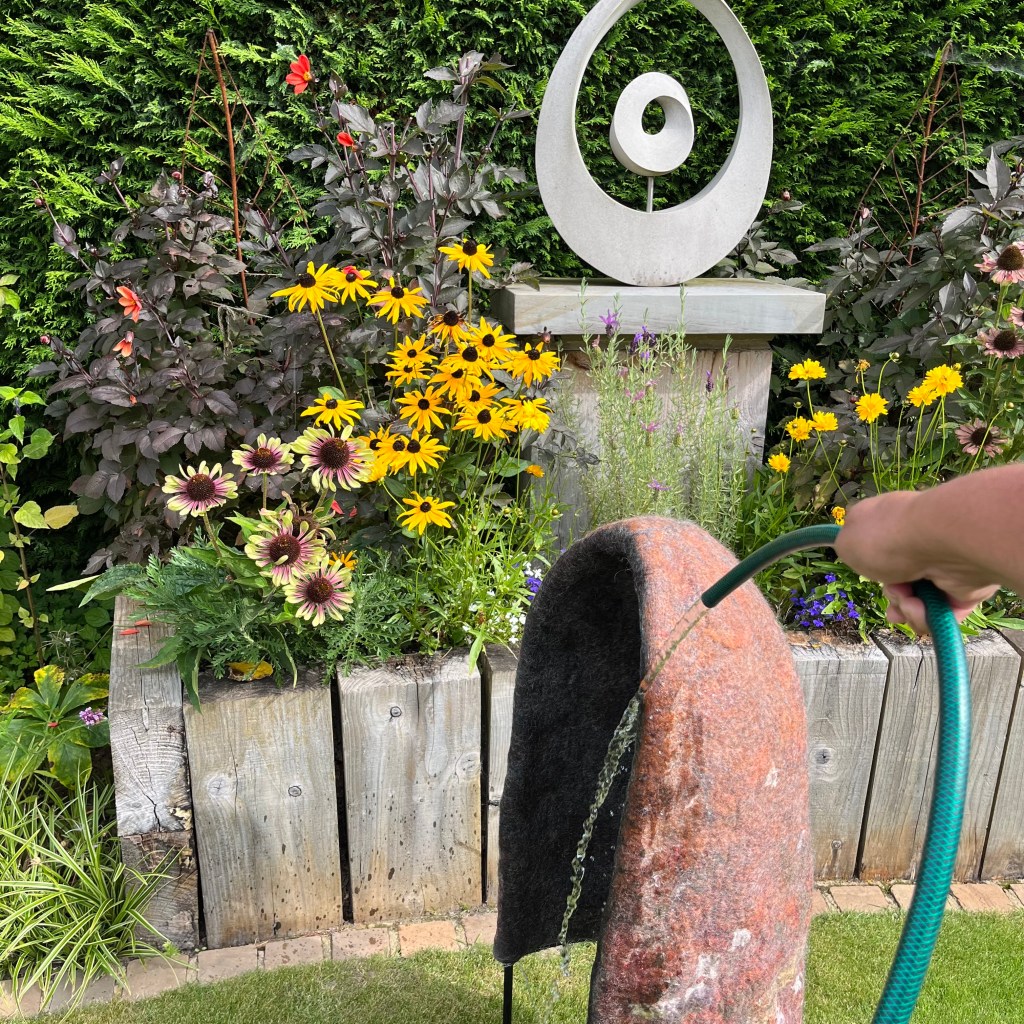
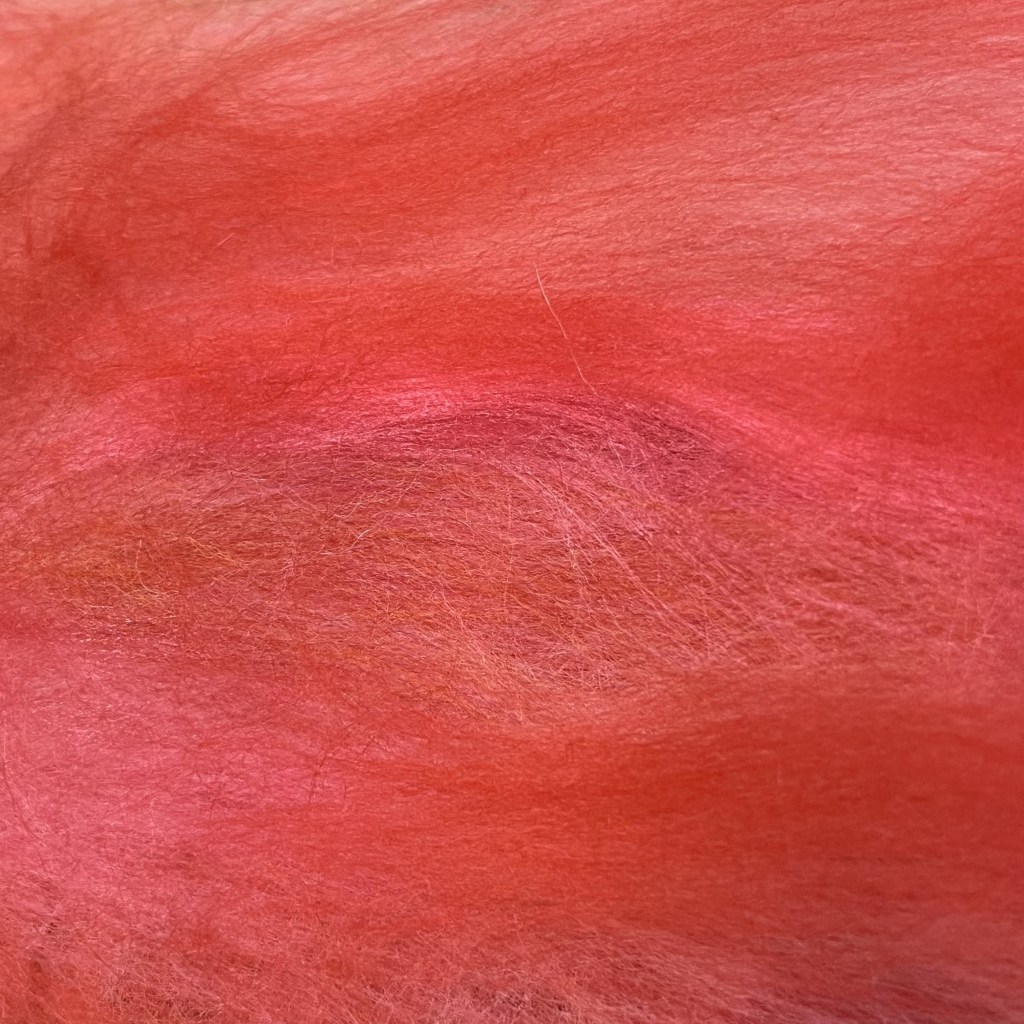
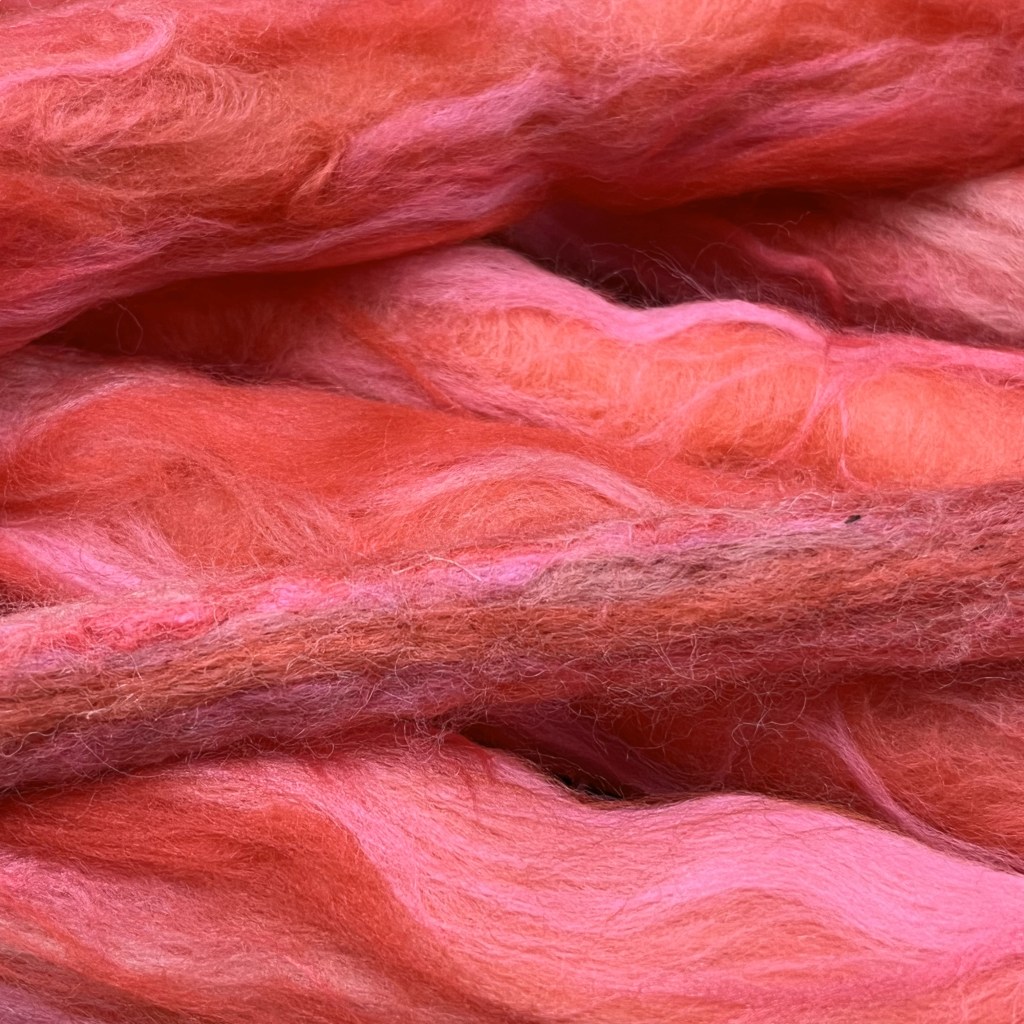
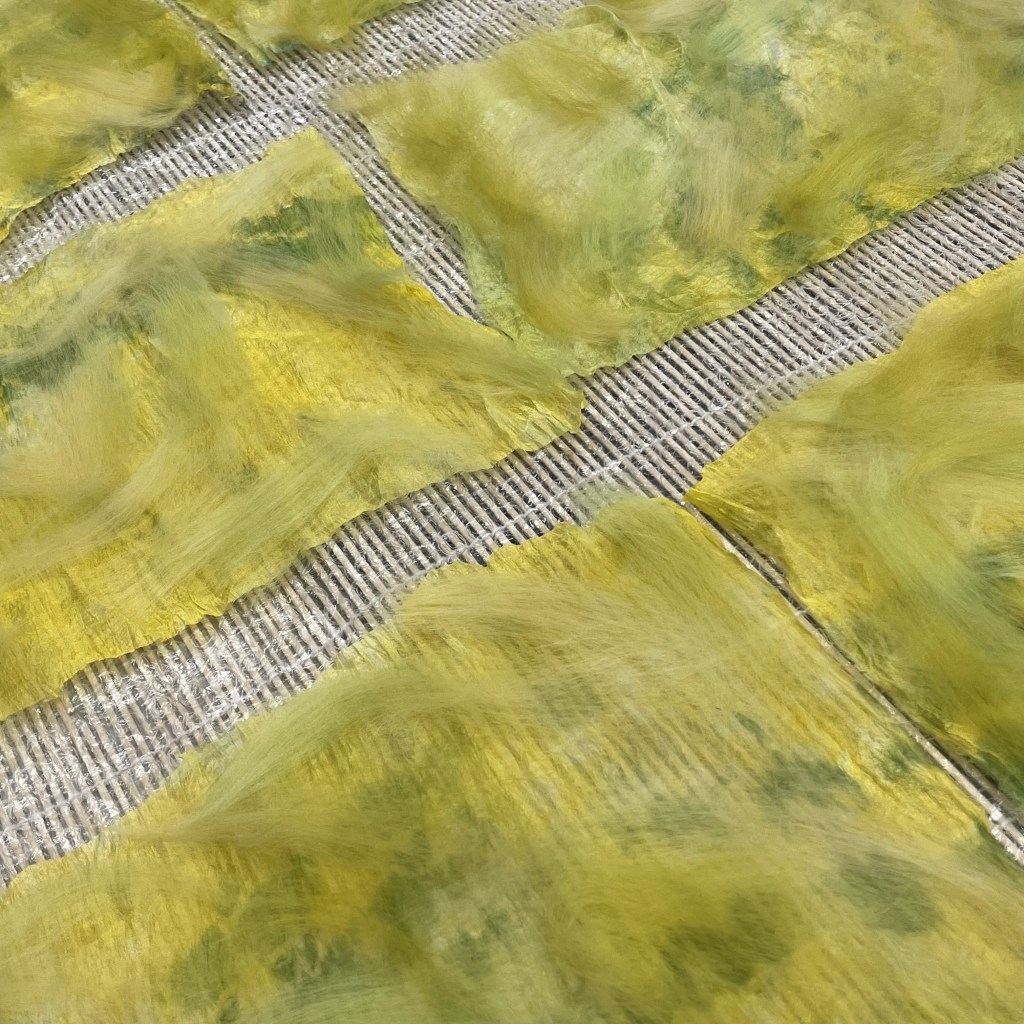
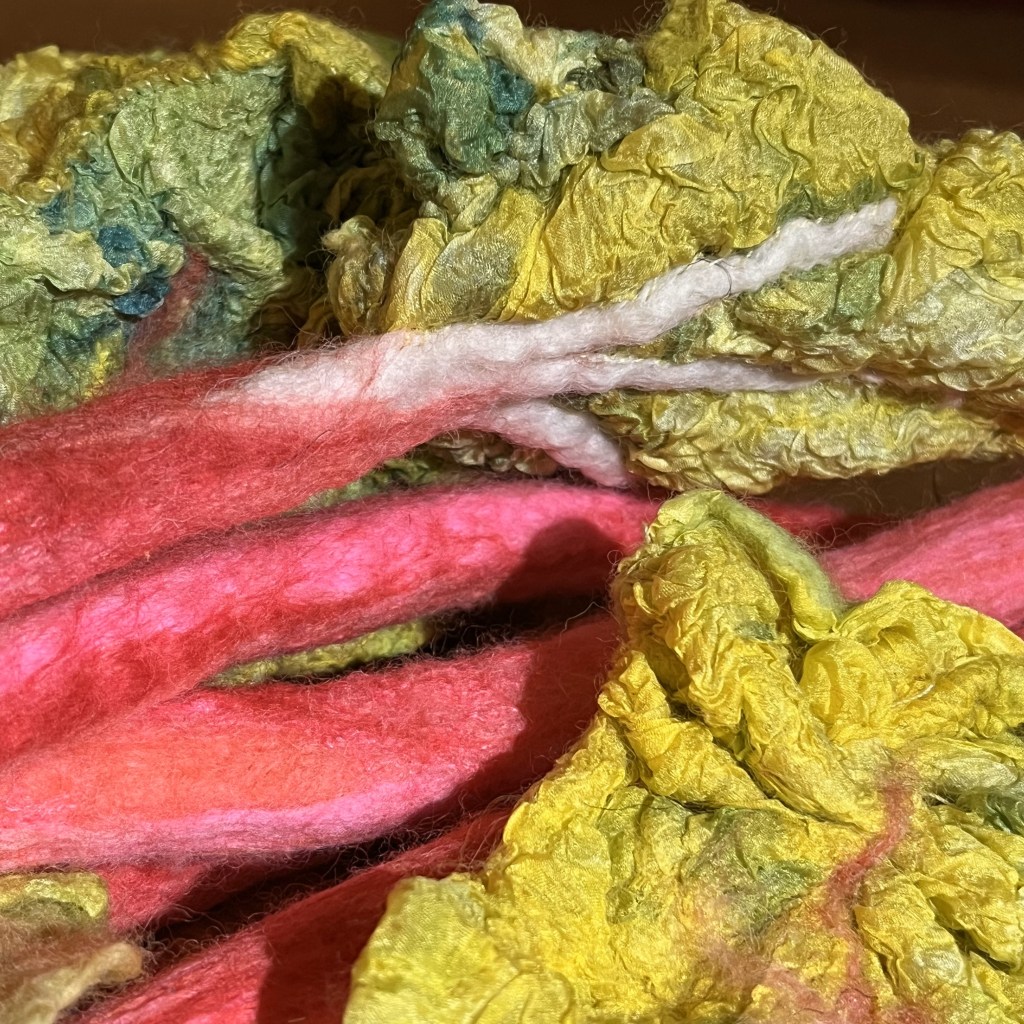
The layer of shoddy on the ground is made from a modern day application of shoddy – recycled wool insulation used for mail order fresh food deliveries. This is made by Edward Clay & Co in Ossett – a shoddy mill dating back to the 1800s. www.edwardclay.co.uk
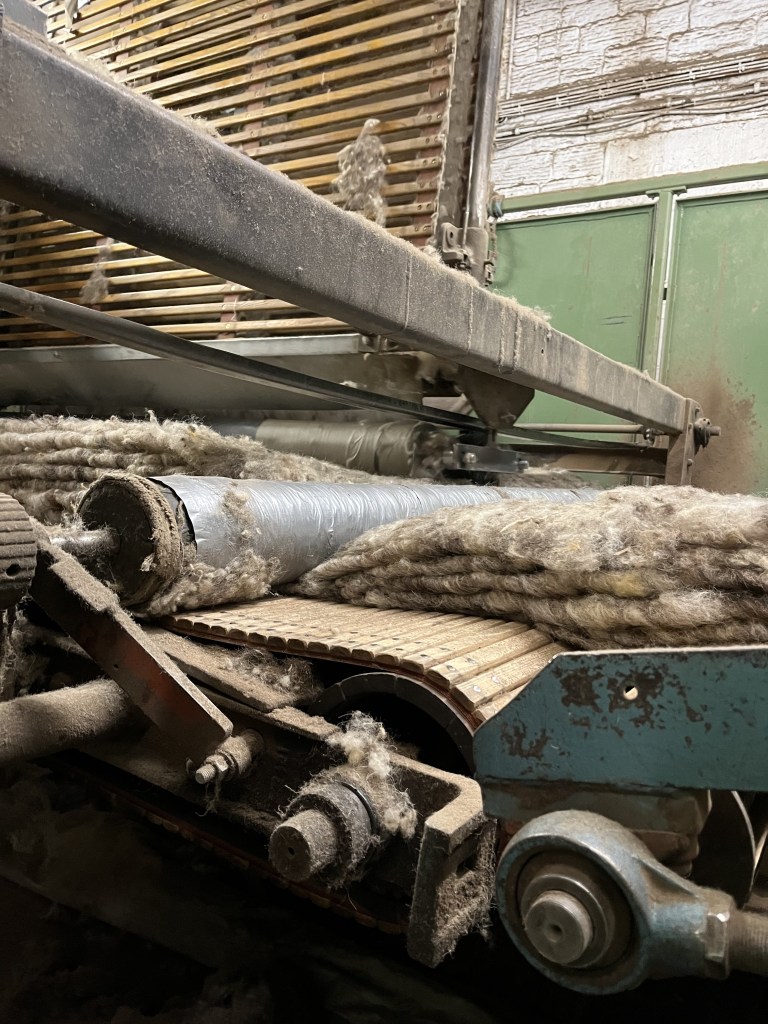
This is the first piece of work I have made for outdoor display. I am interested to see what happens to it, expecting to have to restock the shoddy layer when the birds are nest building, and half hoping to visit one day to find that some small creatures have made their home in the forcer.
Inutile Utile ex Arte
(useless things, by art, made useful)
2024
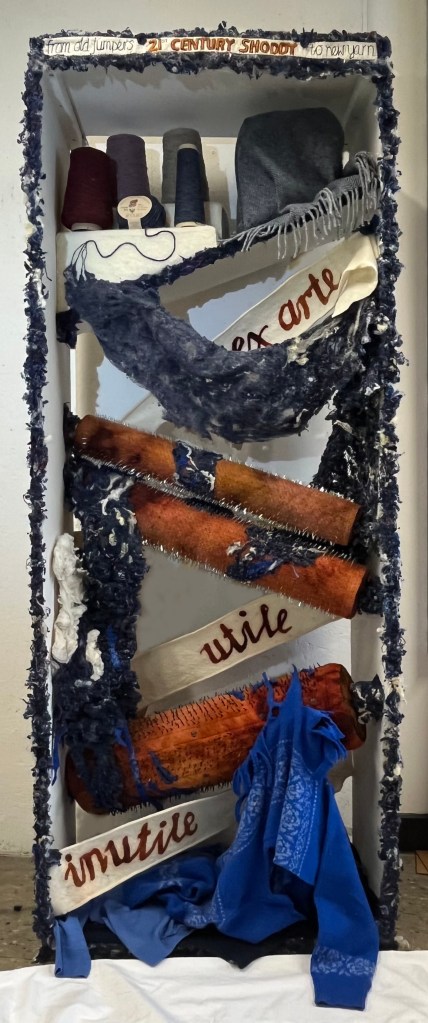
Hand made felt, tacks, staples, woollen garments, shoddy fibres, iinouiio yarns
Today in West Yorkshire, one man, Dr John Parkinson, is determined to preserve this technique and to take it into the 21st century. Using the skills and knowledge developed over generations he is again producing recycled yarn from woollen clothing under his iinouiio brand www.iinouiio.com
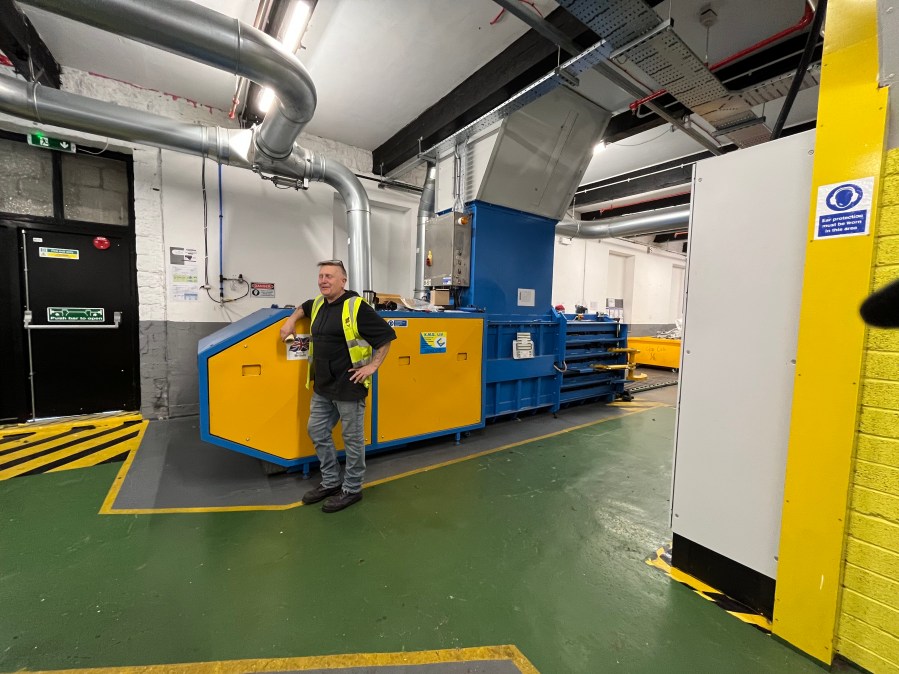
John is also working in collaboration with Camira, a global leader who design, manufacture and supply commercial textiles for contract and transport upholstery ( www.camirafabrics.com). Combining John’s expertise in shoddy techniques with state-of-the-art technology, Camira is able to recycle its own pre-production waste, repurposing it into new fabric, as well as providing recycling and take-back services to the wider textile and furniture industries.
When I visited John at Bay Hall Mills in Huddersfield, I was struck by his determination to preserve the skills and heritage of the shoddy industry and to take them forward. When Benjamin Law first developed shoddy in Batley in the early 1800s it was in response to supply problems in the wool industry with a focus on increasing profitability. Today, however, the focus is very much on sustainability.
I am also amazed by John’s own skills, passed down through his family and developed over his lifetime. I still cannot quite understand how consistent shades of yarn can be produced without additional dyeing, from a motley supply of discarded clothing.
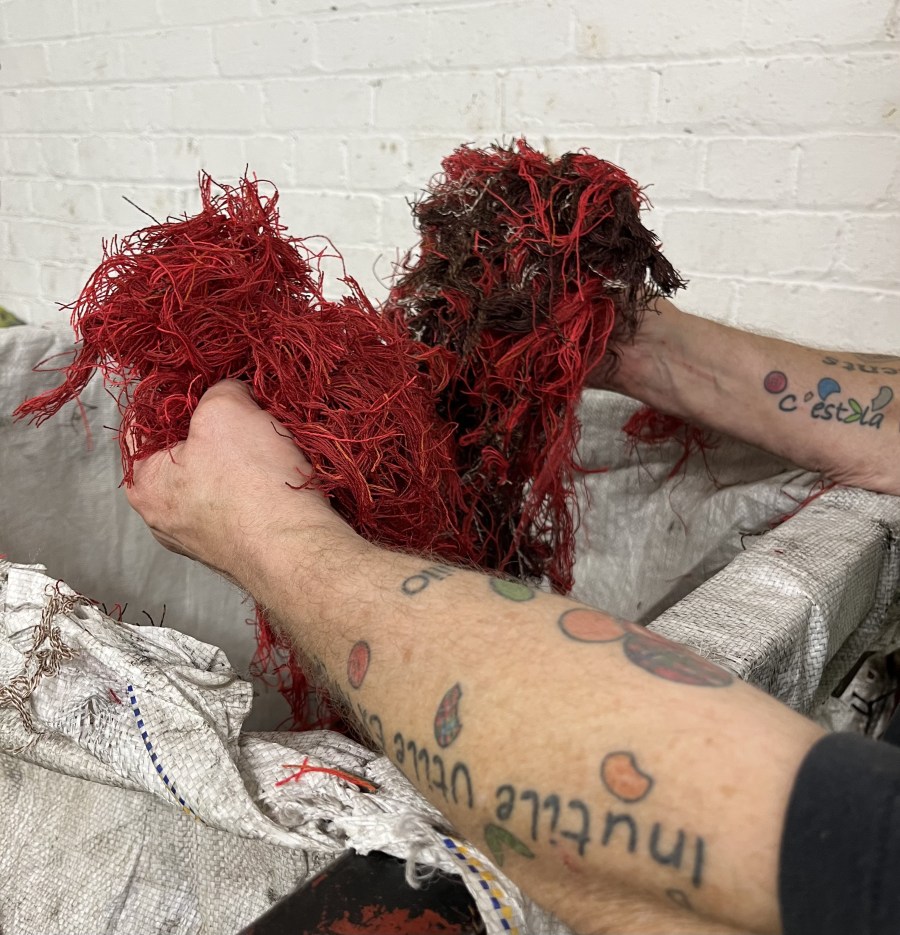
This installation follows the path of the fibres, from old woollen garments through the grinding process which opens the fibres up before they are carded with a little new wool. The fibres of the new wool are longer and add strength when the shoddy is spun into new yarn. The Latin inscription of the title means ‘useless things, by art, made useful’ and is the town motto of nearby Ossett.
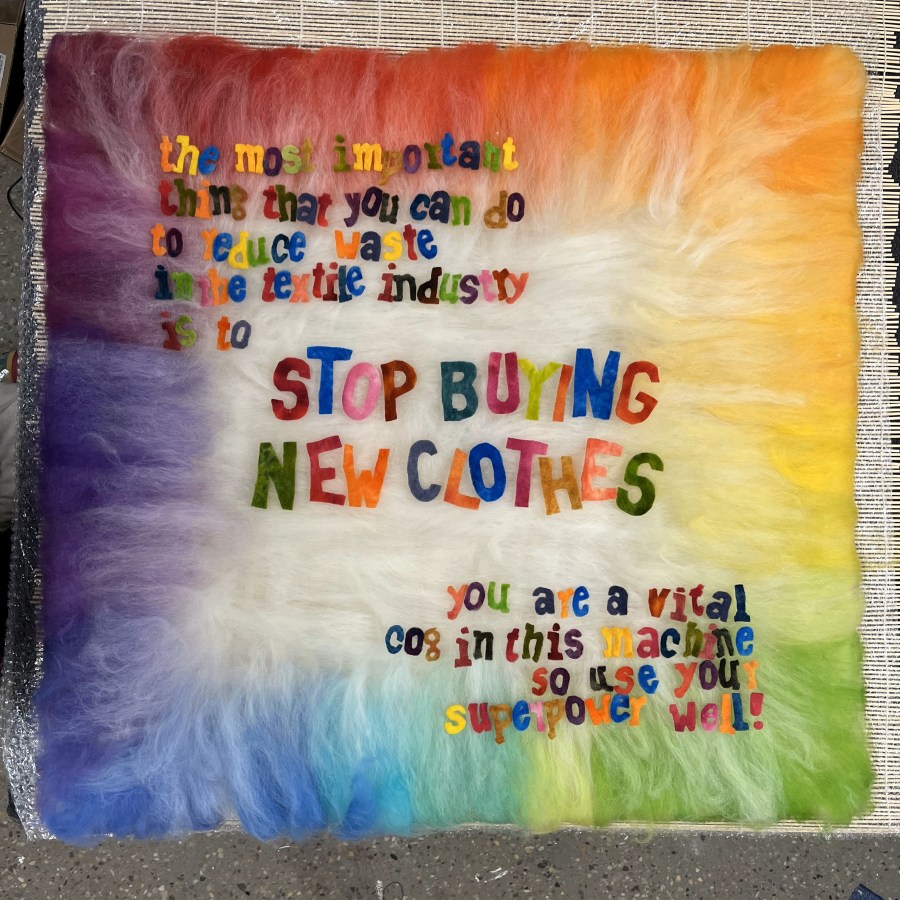
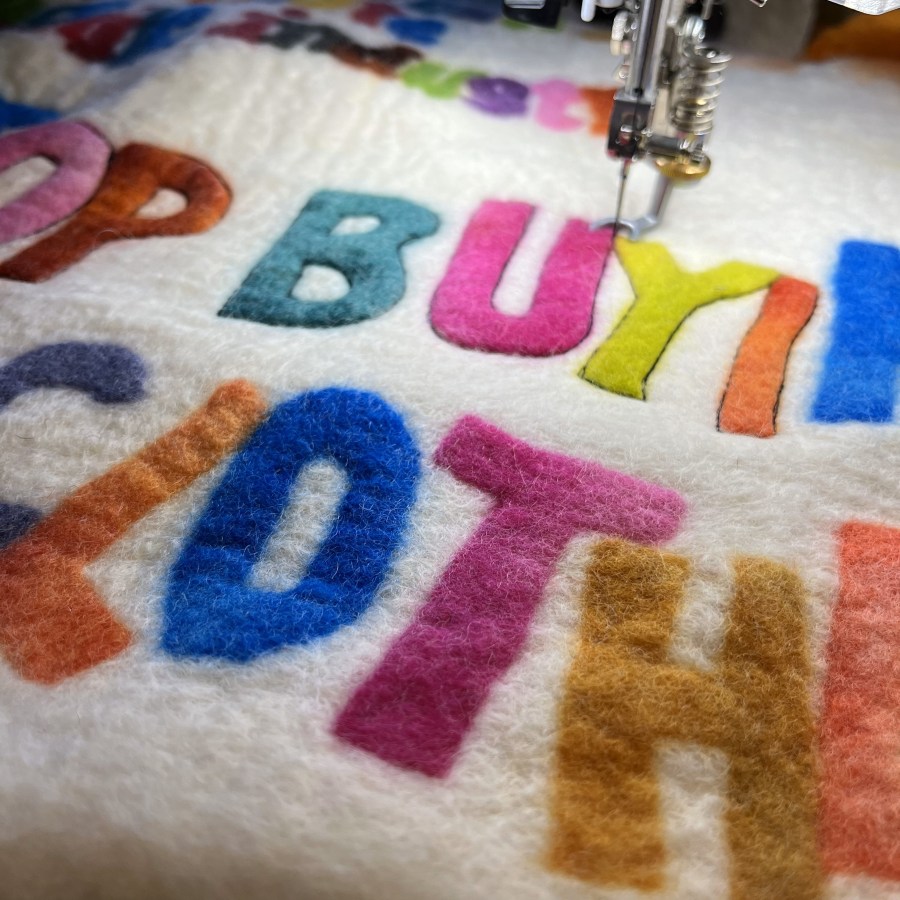
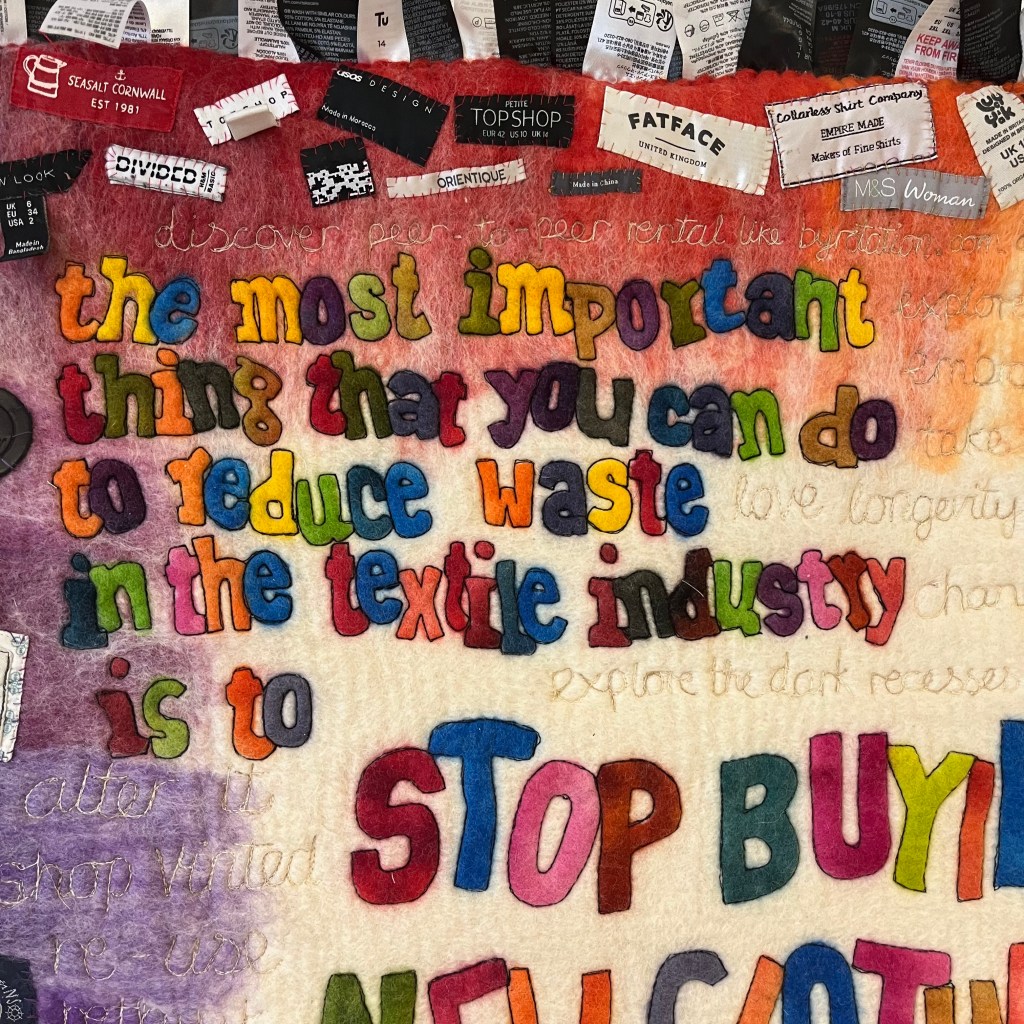
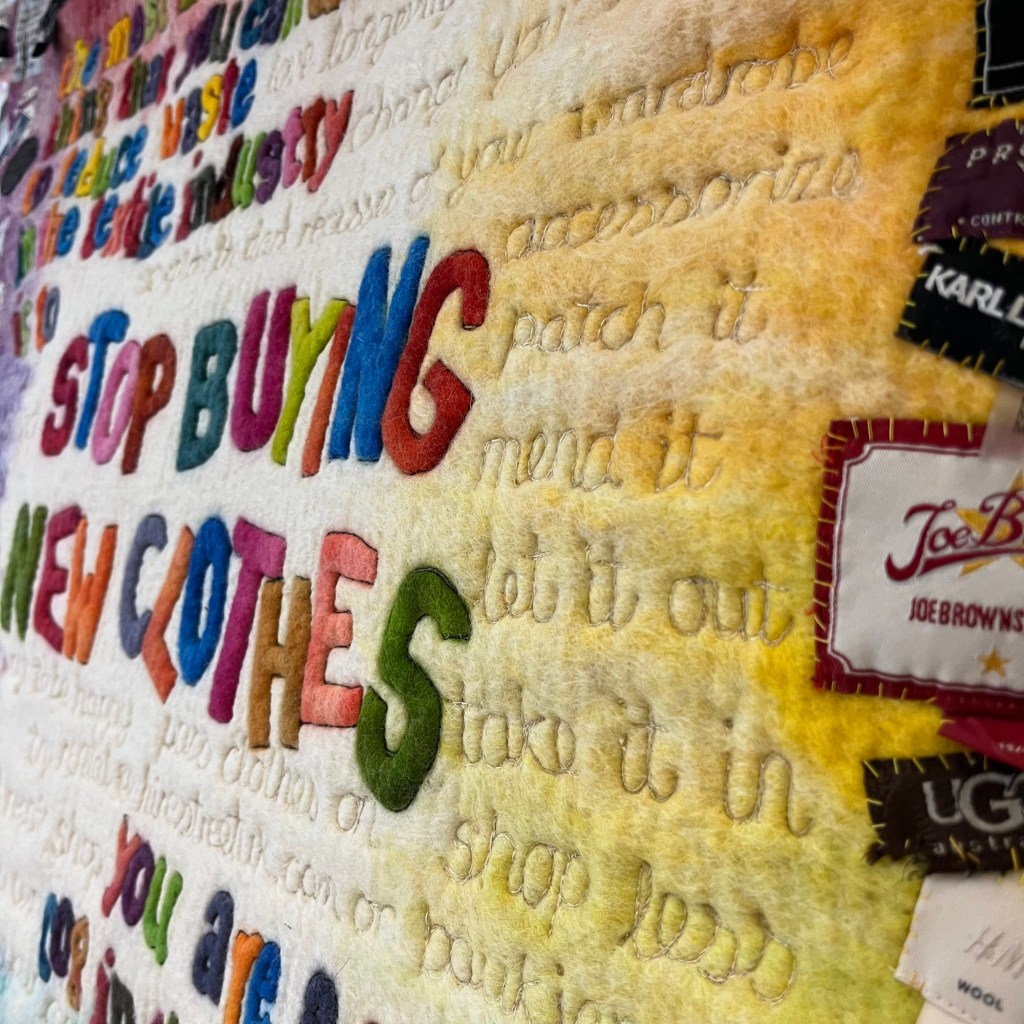
You Have the Power 2024
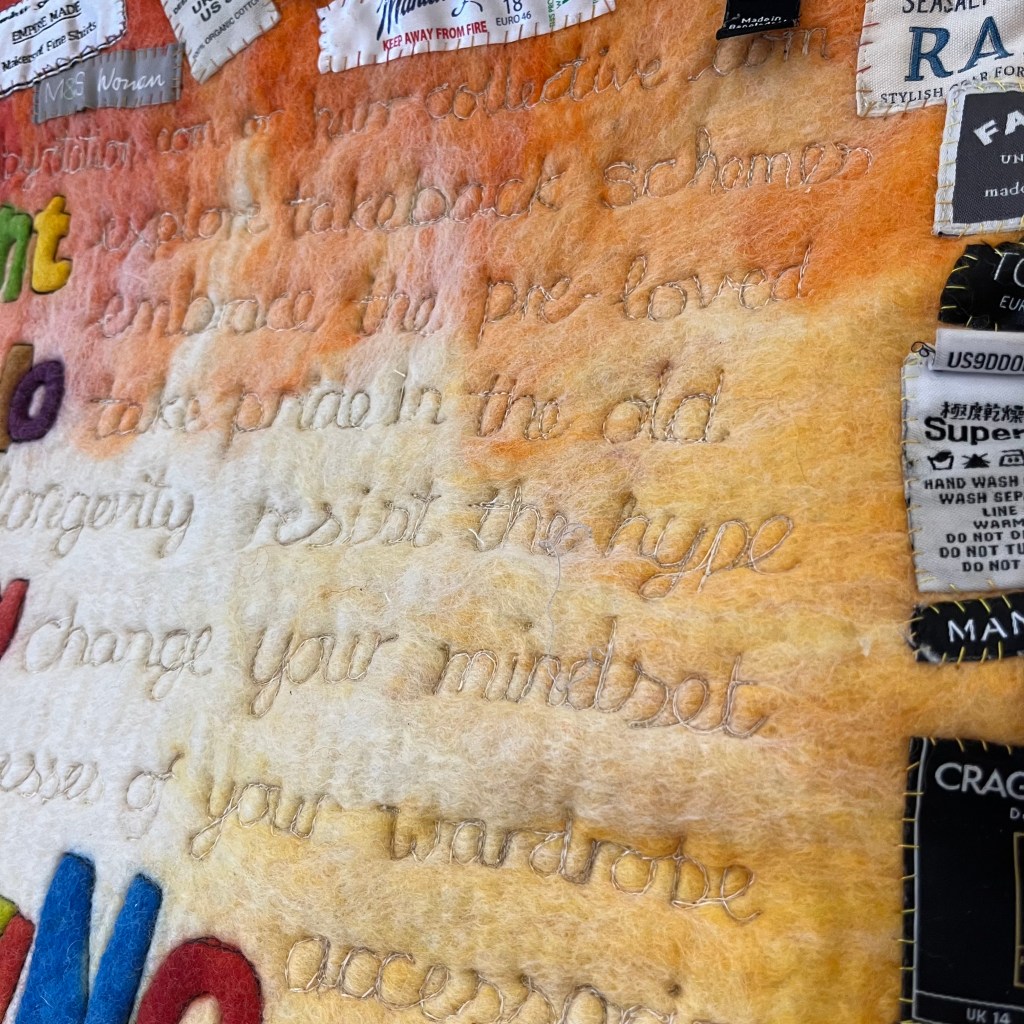
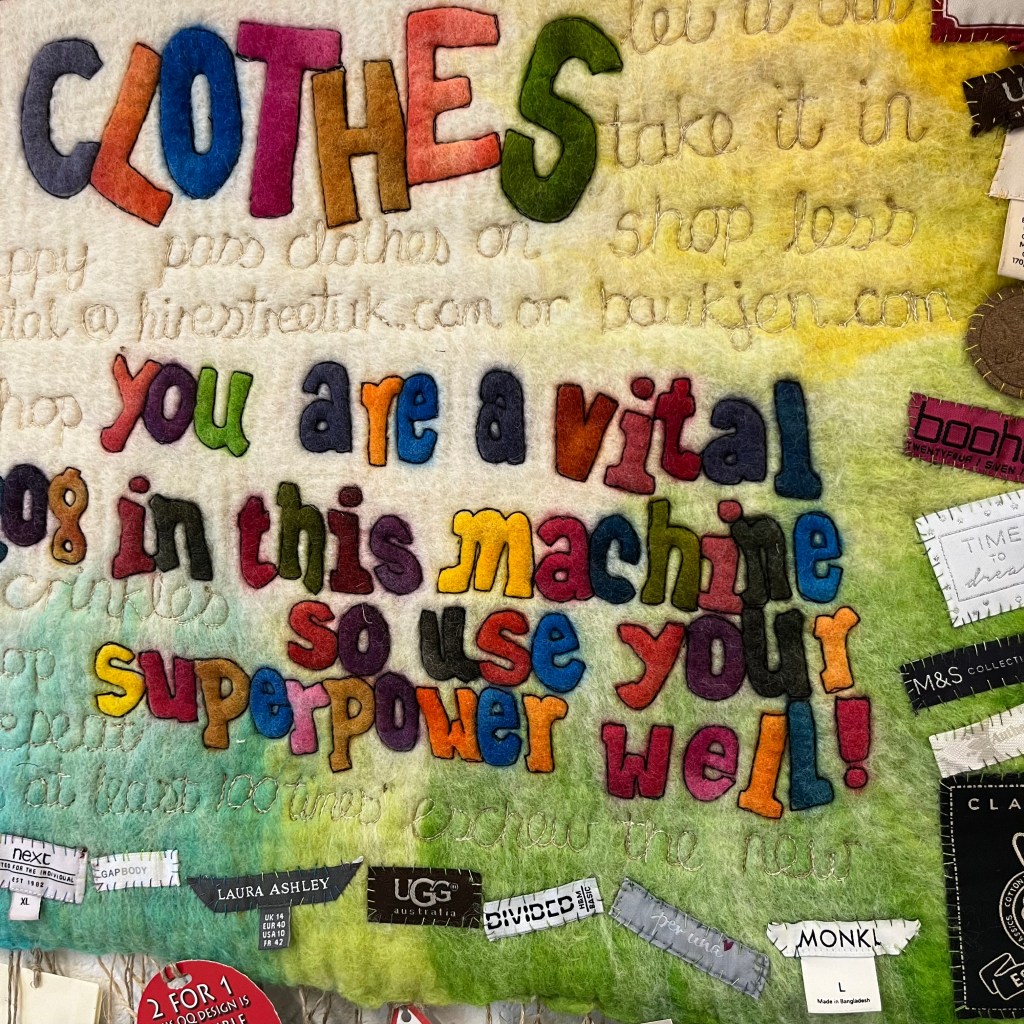
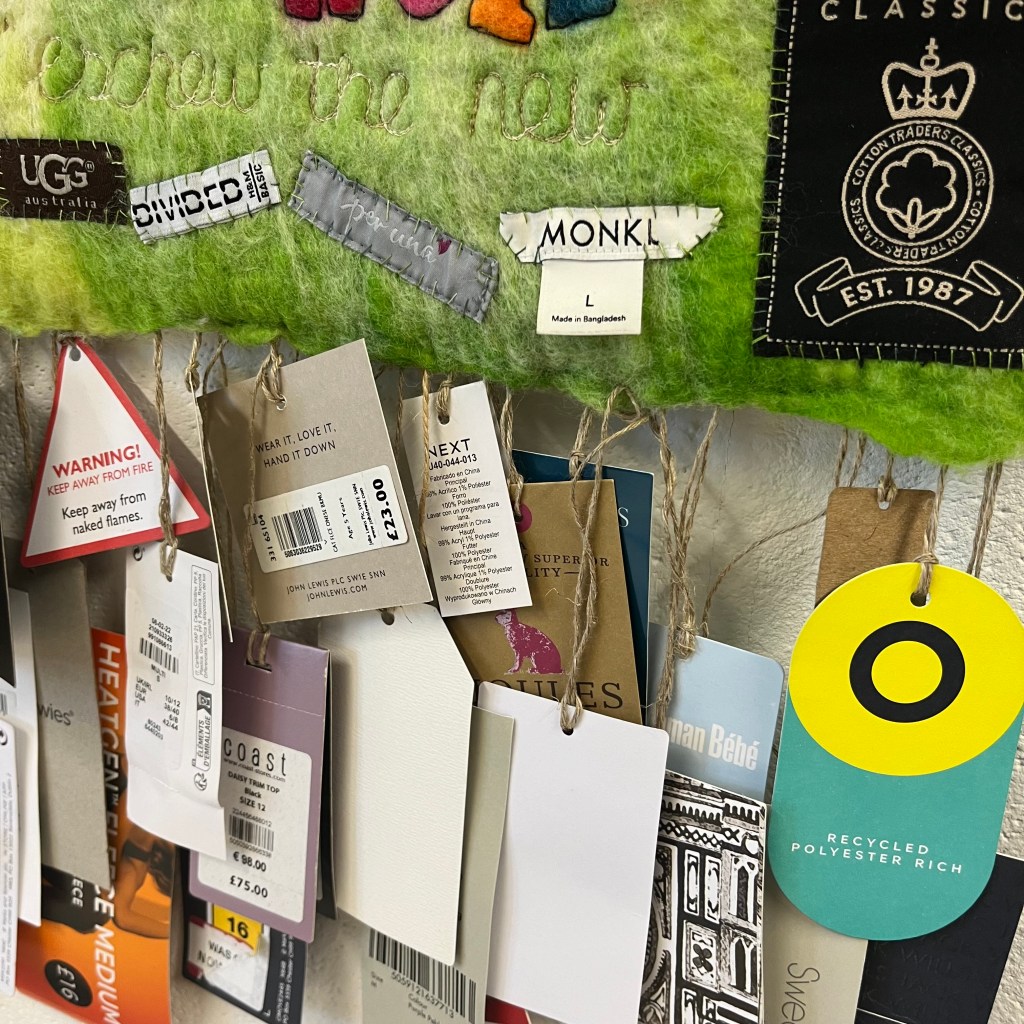
Handmade felt, free-motion stitch, clothing labels

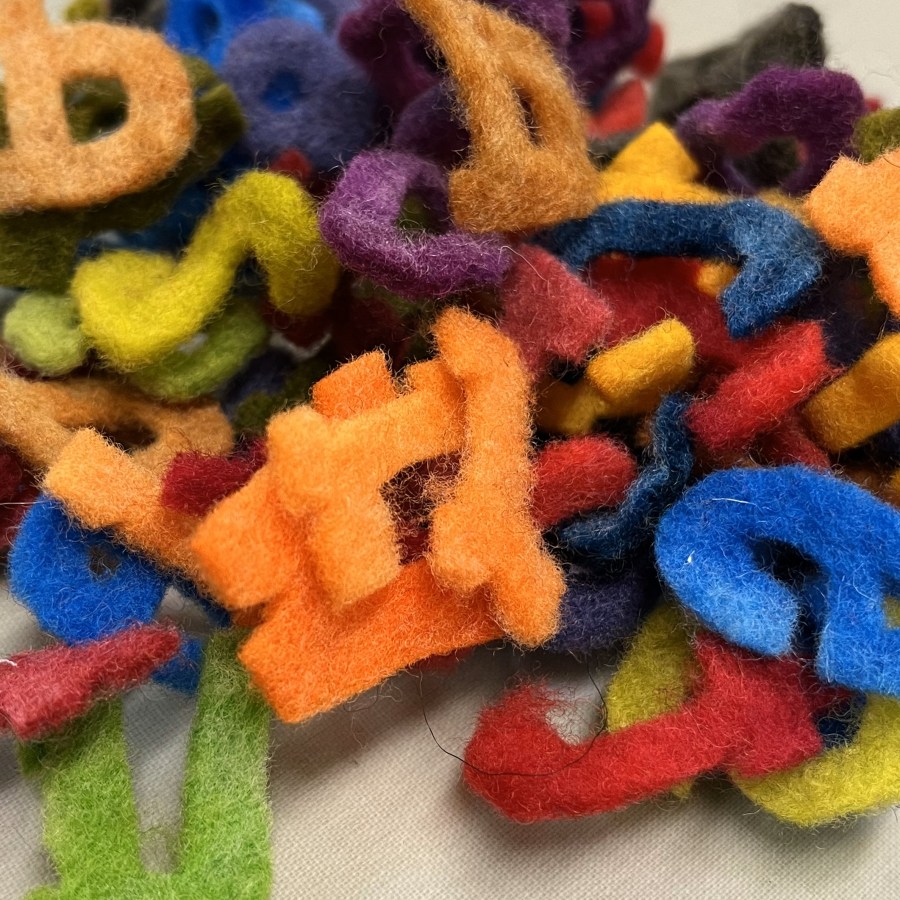
My research into the shoddy industry inevitably brought up wider concerns about the drain on resources and waste caused by the clothing industry. The industry itself is being called upon to make drastic changes but it all made me think about the role of the individual in these days of consumer excess. We tend to comfort ourselves by sending our cast-offs to charity shops and trying to buy ethically. But statistics tell us that of the 3.1kg of textile waste each Briton produces every year, only approximately 0.3kg are recycled and 0.4 kg reused. Shockingly, 0.8kg are incinerated yearly per person and 1.7kg (over half) sent to landfill.
It seems to me that a major reset or our attitude to our ownership of clothing is needed.


 Helen Riddle